
Energy drink wholesale in the USA has become one of the most important supply categories for convenience stores, gas stations, supermarkets, vending companies, beverage distributors and retail chains. Demand reaches well beyond the traditional energy drink consumer. Today, commercial buyers are sourcing product for daily commuters, students, shift workers, fitness enthusiasts, delivery drivers, warehouse staff, office employees and shoppers seeking functional beverages with caffeine, flavor variety and convenient single-serve packaging.
For commercial buyers, the challenge is not simply locating energy drinks. The real challenge is finding a reliable energy drink wholesale supplier that supports bulk orders, pallet supply, truckload volume, consistent brand availability and a purchasing process built for business accounts. This guide explains how energy drink wholesale works in the United States, what commercial buyers should evaluate before placing orders, and how T20 Energy Drink USA LLC supports supply across key retail and distribution channels.
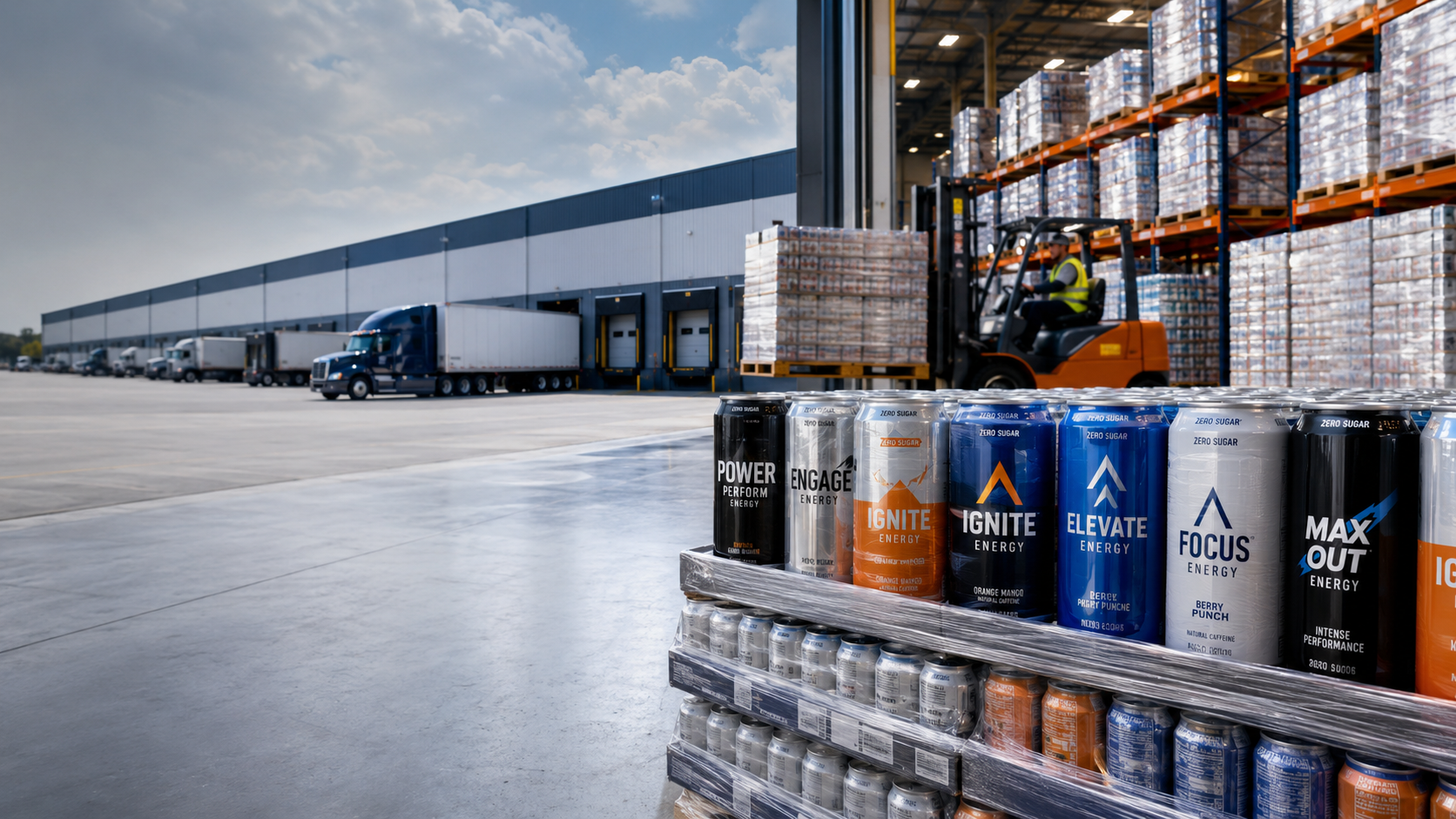
Understanding Energy Drink Wholesale in the United States
Energy drink wholesale is the commercial sourcing of energy drinks in larger quantities for resale, distribution or business use. Instead of buying single cans or small retail packs, wholesale buyers purchase by case, bulk quantity, pallet or truckload depending on their sales volume, storage capacity and customer base.
The wholesale model matters significantly in the beverage industry because energy drinks move fast in retail environments. A convenience store operator needs regular mixed-case replenishment to keep coolers full without tying up too much cash in inventory. A gas station needs high-demand brands available across cooler doors at all times, because a stockout on Monster or Red Bull on a busy Friday afternoon is a direct revenue loss. A vending company needs compact product variety that performs well in machines across many locations. A beverage distributor needs pallet or truckload quantities to serve multiple downstream retail accounts on a predictable schedule.
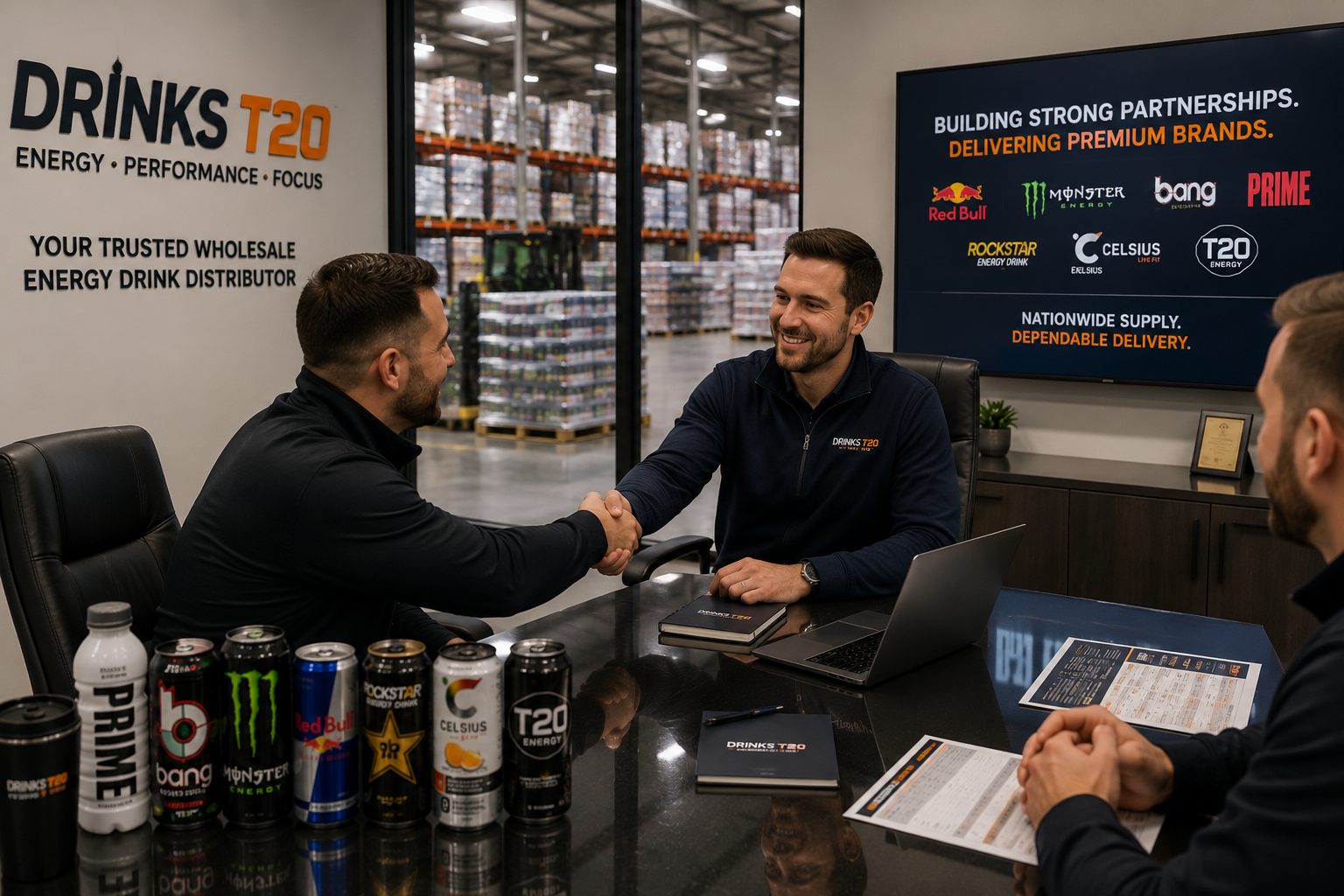
Each of these buyers operates differently, but all of them share the same core need: a supplier that understands commercial purchasing. This is why T20 structures its supply model around different buying formats, including bulk energy drink orders, pallet orders, truckload supply and distributor opportunities.
The Size and Growth of the U.S. Energy Drink Market
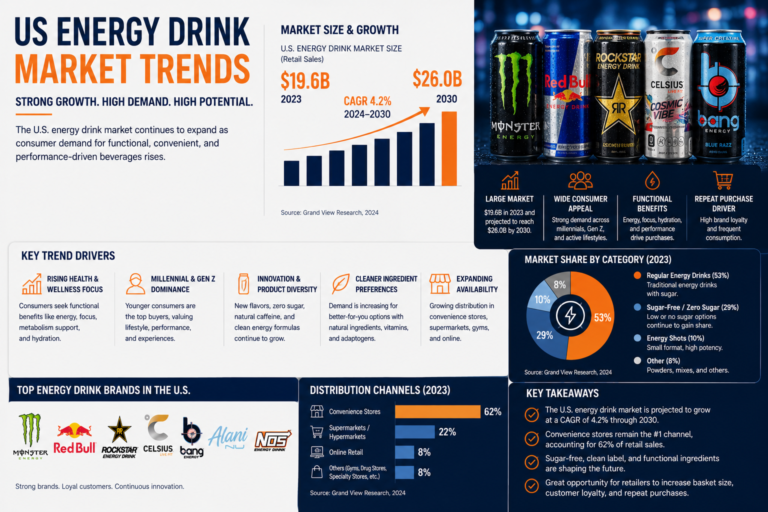
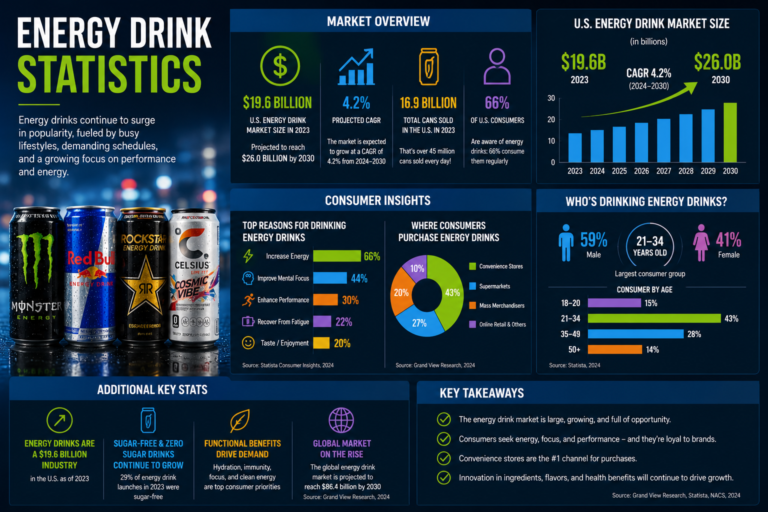
The U.S. energy drink market is one of the strongest packaged beverage categories in the country, and the numbers reflect that consistently. According to NielsenIQ, the energy drink market generated more than $22 billion in tracked sales during the period reported in 2024. Grand View Research estimated the U.S. energy drinks market at approximately $25.01 billion in 2024, with continued growth projected through 2030.
For commercial buyers, the most relevant data point comes from the convenience store channel. The National Association of Convenience Stores reported that energy drinks led all packaged beverage sales in convenience stores, accounting for 27.8% of overall packaged beverage category dollars in 2024. No other single beverage segment comes close. That figure matters because it signals where consumer spending is concentrated and why energy drink cooler placement is one of the most commercially important decisions a convenience store makes.
The category is also evolving in ways that affect wholesale buying decisions. Traditional high-caffeine energy drinks remain the volume backbone, but buyer demand is expanding into sugar-free formulas, functional beverages, fitness-oriented drinks, zero-calorie options and wider flavor variety. Brands such as Monster Energy, Red Bull, Celsius, Prime Energy, Rockstar and Bang each serve different consumer segments within the broader energy drink category. Wholesale buyers that understand these distinctions are better positioned to carry the right mix for their specific customer base.
How Energy Drink Wholesale Distribution Works
Energy drink distribution moves through a structured supply chain. Manufacturers and brand owners produce the product at scale. Distributors, wholesalers and suppliers then move inventory into retail and commercial channels. From there, convenience stores, gas stations, supermarkets, vending companies and regional beverage distributors make the product available to end consumers.
For commercial buyers, the practical question is which point in that supply chain to connect with, and in what format. A small independent convenience store may begin with bulk case supply to manage cash flow and storage. A growing gas station group may need pallet delivery on a defined replenishment cycle. A regional beverage distributor serving dozens of retail accounts will need truckload pricing and consistent availability to service its downstream customers reliably.
T20 Energy Drink USA LLC operates for commercial buyers that need structured ordering, not consumer-level retail transactions. The supply model is built around business accounts that need energy drinks in volume, whether that means mixed brands, specific product lines, pallet quantities or distributor-level supply contracts. Each buyer type has different operational needs, and those differences shape what a good wholesale relationship looks like in practice.
Who Buys Energy Drinks in Bulk?
Energy drinks are purchased by many different types of commercial buyers. Each group has a different sales environment, a different inventory cycle and different expectations from a wholesale supplier. Understanding these distinctions helps buyers recognize where their own sourcing needs fit within the broader wholesale model.
Convenience Stores
Convenience stores are the single most important retail channel for energy drink sales in the United States. Customers visit convenience stores for quick purchases across many categories, including cold beverages, snacks, tobacco, prepared food and fuel-related stops. Energy drinks are well suited to this environment because they are fast-moving, easy to merchandise in a cooler, strongly connected to impulse purchases and repeat buying behavior.
A convenience store owner operating a single location may sell 50 to 100 units of core energy drink SKUs per day during peak periods, depending on traffic and demographics. At that velocity, supply continuity is not optional. Stockouts on top-selling items like Monster Original, Red Bull 8.4oz or Celsius Sparkling Orange translate directly into lost sales and disappointed regulars who may not return.
For convenience store buyers, wholesale energy drink sourcing should prioritize brand recognition, cooler visibility, flavor variety and reliable replenishment schedules. A well-planned product mix typically includes core best-sellers, sugar-free alternatives, fruit flavor varieties and at least one functional or fitness-positioned option to capture younger consumers and health-conscious regulars.
Gas Stations
Gas stations are another high-value channel for energy drink volume. Drivers, commuters, truck operators, delivery workers and long-distance travelers often purchase energy drinks during fuel stops. In this environment, energy drinks are not simply beverage products. They are a practical purchase tied to alertness, work schedule and travel routine.
Gas station forecourts see predictable traffic patterns, with morning commuters and afternoon drive-time periods generating strong impulse buying. For operators, having energy drinks stocked and visible in cooler doors, front-of-store displays and checkout areas is a straightforward revenue decision. Pallet or mixed-case ordering is generally more efficient than small case-by-case buying, particularly for multi-site gas station operators that need consistent stock across locations.
Brand diversity matters here too. Not every gas station customer wants the same product. Stocking Monster, Red Bull, Celsius and an emerging brand like Prime alongside a sugar-free selection gives the operator coverage across the full spectrum of energy drink buyers.
Supermarkets
Supermarkets require broader beverage category planning than convenience or gas channel buyers. Energy drinks may appear in single cans, multi-packs, cold coolers, endcap displays or dedicated beverage aisles. Supermarket buyers often manage category performance metrics, planogram requirements and promotional calendars alongside basic purchasing decisions.
For supermarkets, wholesale energy drink sourcing should account for shelf space allocation, brand variety, case packaging format, consumer demand by local demographics, pricing structure relative to the retailer’s competitive environment and seasonal or promotional rotation. A supermarket in a college town will stock a different mix than one serving a suburban family market or an urban location with heavy commuter traffic.
Consistent supply is especially important for supermarkets because promotional commitments, flyer advertising and shelf resets depend on product availability. A supplier that cannot reliably fulfill pallet orders on schedule creates downstream problems for the buyer’s category management team.
Vending Companies
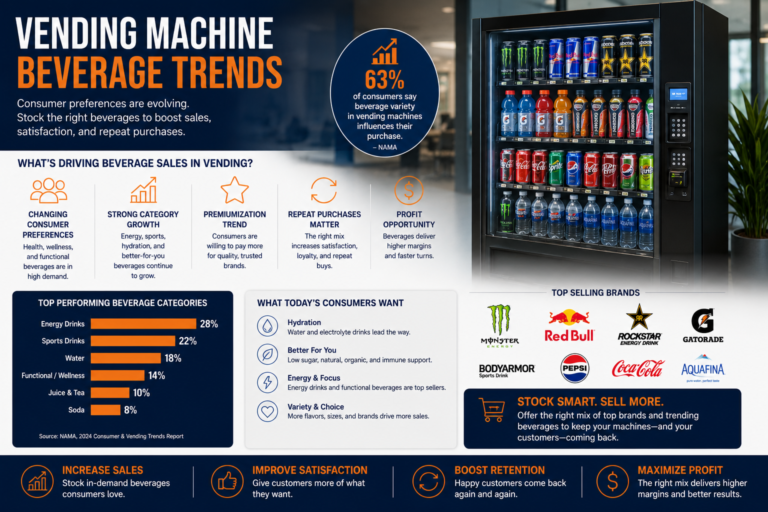
Vending companies purchase energy drinks for machines located in offices, gyms, warehouses, schools, transport hubs, apartment buildings and commercial facilities of all kinds. Energy drinks perform well in vending because they are compact, recognizable, consumed on-site and frequently purchased for work, study or fitness-related energy needs.
Vending operators typically manage large machine footprints across many accounts, which means product selection decisions affect revenue at scale. A wrong SKU choice that underperforms in machines across 50 locations creates a cash flow and inventory problem. A right choice that sells through consistently is a repeatable revenue stream.
Vending buyers should focus on can size compatibility with machine specs, brand recognition, price point relative to the machine’s target demographic, and product rotation planning. Sugar-free and functional energy options have grown in vending performance as workplace wellness awareness increases. Stocking both traditional and functional energy drinks helps vending companies serve a wider customer base without overloading machine capacity.
Beverage Distributors
Beverage distributors need larger-volume purchasing options because their business model depends on resale to multiple downstream accounts. A regional distributor is not buying for one location. They are buying to supply dozens or hundreds of retail accounts across a territory, which means their supply needs are fundamentally different from a single-site retailer.
For distributors, the most important considerations are supply reliability, product mix flexibility, brand demand at the retail level they serve, logistics coordination, margin structure and long-term relationship stability. A distributor that commits to an energy drink line needs confidence that the supplier can fulfill reorders consistently and at terms that allow the distributor to operate profitably across their account base.
Distributors should also consider brand mix carefully. Carrying only one or two energy drink brands limits the distributor’s ability to serve retail accounts that want variety. A broader mix that includes Monster, Red Bull, Celsius and additional functional or emerging brands gives the distributor more commercial range and more flexibility to meet different retail buyer requirements.
Popular Energy Drink Brands in Wholesale Distribution
Wholesale buyers generally want access to energy drink brands that consumers already recognize. Established brand recognition reduces retail friction because consumers already know the product, understand the flavor profile and associate the brand with a consistent experience. That familiarity drives repeat purchase. At the same time, retailers and distributors benefit from carrying a mix that includes both established players and emerging functional or lifestyle brands to capture evolving demand.
Monster Energy Wholesale
Monster Energy is one of the most widely recognized energy drink brands in the U.S. market. It appeals to a broad consumer base across demographics and is consistently among the top-selling packaged beverages in convenience stores and gas stations nationally. The brand’s SKU range covers original formulas, sugar-free options, fruit flavors, juice blends, coffee hybrids and performance-oriented lines, giving wholesale buyers multiple product entry points depending on their customer base.
Commercial buyers interested in Monster supply can review the dedicated Monster Energy wholesale resource for brand-specific buying guidance and sourcing considerations.
Red Bull Wholesale
Red Bull remains one of the most established names in the global energy drink category. Its compact can format, high brand equity and broad consumer awareness make it a default stocking decision for most convenience stores, gas stations, supermarkets and vending operators. Red Bull’s consistent premium positioning also supports stronger retail margins than many competing brands.
Buyers focused specifically on Red Bull supply can review the Red Bull wholesale guide for detailed buying and sourcing considerations.
Celsius Wholesale
Celsius has grown into one of the fastest-expanding functional energy drink brands in the United States, particularly among fitness-oriented and health-conscious consumers. Its positioning differs from traditional energy drinks because it emphasizes lifestyle, wellness and performance rather than just caffeine delivery. This distinction makes Celsius a useful addition to product mixes aimed at gym-goers, younger professionals and consumers actively moving away from sugary beverages.
Retailers and vending operators looking to capture this consumer segment can use the Celsius wholesale page to understand where Celsius fits within a commercial beverage mix and what buying considerations apply.
Prime Energy Wholesale
Prime Energy attracted significant consumer attention through its association with high-profile figures and its appeal to younger demographics. For retail stores, vending operators and distributors looking to capture younger shoppers and high-interest product demand, Prime represents a relevant addition to a broader energy drink selection.
Commercial buyers can review the Prime Energy wholesale article for product-specific sourcing information and market context.
Rockstar, Bang and T20 Energy Drink
Rockstar and Bang serve distinct consumer segments within the energy drink category. Rockstar appeals to buyers seeking variety in flavor and format at accessible price points. Bang built a following in the fitness and high-caffeine market before its broader distribution expansion. Both brands fill meaningful positions in a well-rounded energy drink product mix.
T20 Energy Drink also provides an additional opportunity for buyers interested in distributor relationships, direct wholesale supply and sourcing options connected directly to T20 Energy Drink USA LLC. Buyers interested in exploring brand options across the full energy drink category can visit the energy drinks category page.
Bulk Orders vs Pallet Orders vs Truckload Orders
Choosing the right order format is one of the most practical decisions a commercial energy drink buyer makes. The wrong format, ordering in quantities too small or too large for current demand, creates unnecessary cost, storage pressure or stockout risk. The right format aligns purchase volume with sales velocity, storage capacity, cash flow and delivery logistics.
Bulk Energy Drink Orders
Bulk orders are appropriate for buyers that need more than standard retail quantities but are not yet ready for full pallet or truckload volume. This category includes smaller independent retailers, new commercial accounts, event suppliers, gyms, offices, vending operators adding a location and buyers testing demand for a new brand or flavor before committing to higher volumes.
Bulk ordering gives businesses access to better per-unit pricing than retail while preserving flexibility. A single-location convenience store expanding its energy drink selection may start with bulk mixed-case supply across three or four brands before deciding which SKUs move fast enough to justify pallet orders. This testing approach reduces inventory risk while still providing a meaningful pricing advantage over retail purchasing.

Energy Drink Pallet Orders
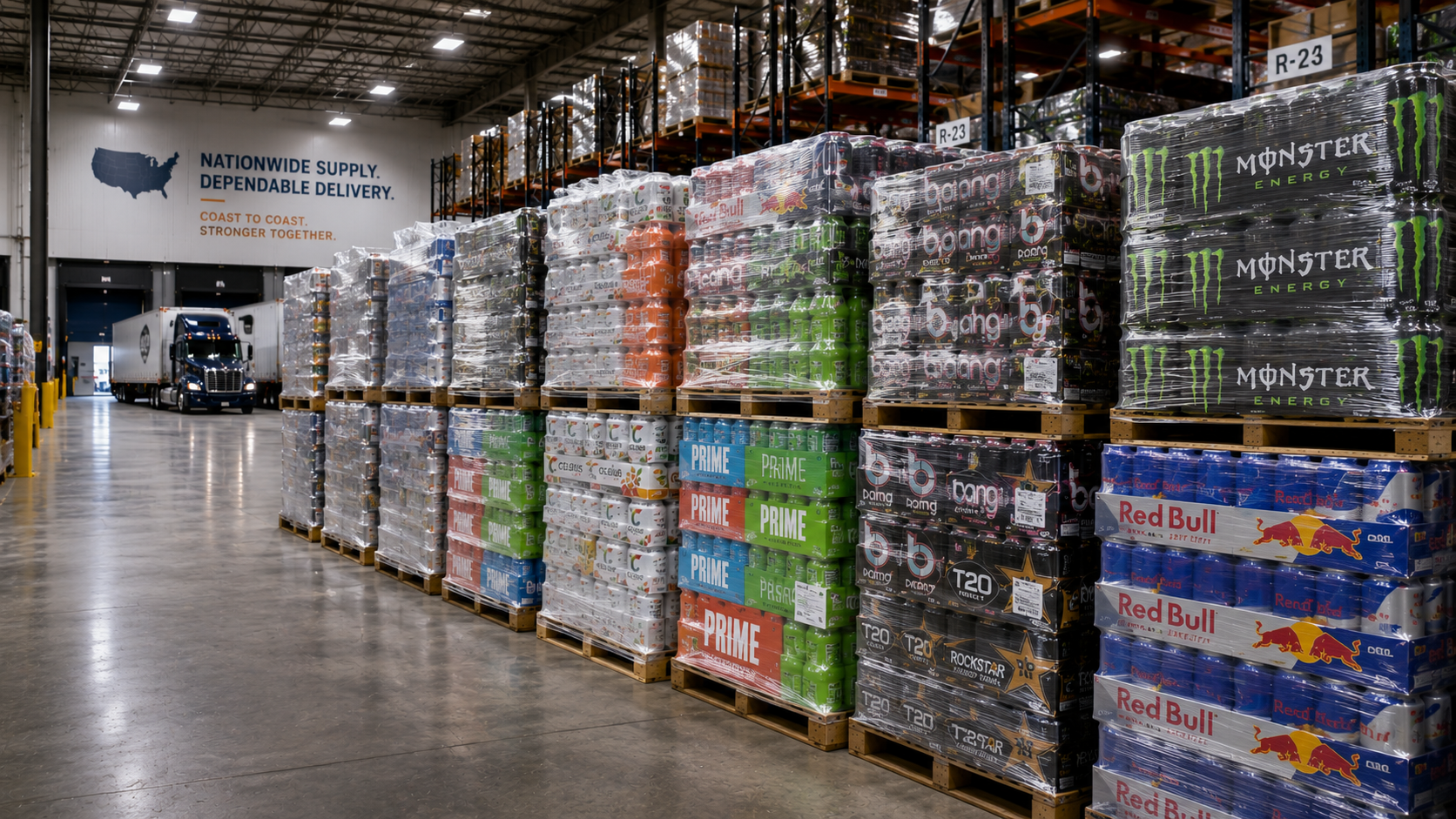
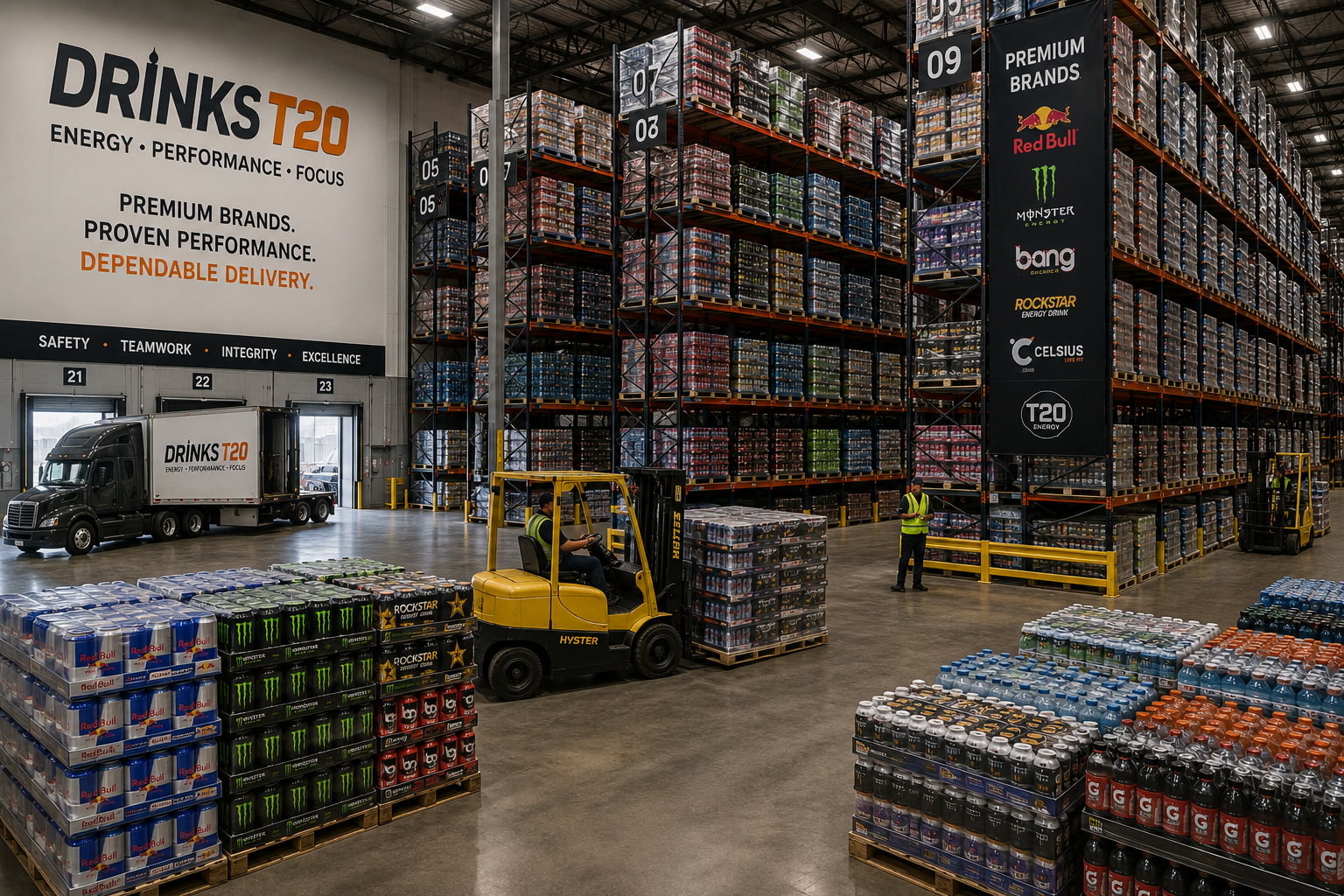
Pallet orders are one of the most practical formats for wholesale energy drink purchasing at a commercial scale. A standard energy drink pallet typically contains a defined number of cases stacked and shrink-wrapped for efficient transport and handling. Pallet orders are commonly placed by convenience stores, gas stations, supermarkets, vending companies and regional distributors that have confirmed demand and adequate storage capacity.
Pallet ordering improves inventory control because buyers plan replenishment around a defined quantity. Rather than placing frequent small orders that create administrative burden and inconsistent supply, a buyer on a pallet cycle knows exactly what they are receiving, when it arrives and how long it should last based on their sales velocity. This predictability simplifies warehouse movement, product rotation and shelf planning.
For buyers receiving pallets, dock access and handling equipment matter. A convenience store receiving a pallet in a back-alley delivery needs different logistics planning than a supermarket with a full loading dock and pallet jack. Buyers should confirm their receiving setup before committing to pallet volume.
Truckload Energy Drink Supply
Truckload energy drink supply is the right format for larger buyers that need high-volume inventory in a single shipment. This format is most commonly used by beverage distributors, regional supply companies, retail chains with central warehouse operations and commercial operators managing multiple locations simultaneously.
Truckload orders require significantly more planning than bulk or pallet purchases. Buyers need to confirm warehouse space, unloading capability, product rotation capacity, sales velocity projections and brand mix before placing an order at this scale. Getting a truckload order wrong in terms of brand selection or volume can create months of inventory pressure, especially for products with defined shelf life or limited local demand.
At the same time, truckload purchasing typically unlocks the strongest per-unit pricing available. For distributors that have confirmed downstream demand across their account base, truckload orders are a straightforward way to maximize margin while securing a large inventory position before a supply constraint or price movement affects availability.
Who Wholesale Energy Drinks Go To: Channel Breakdown
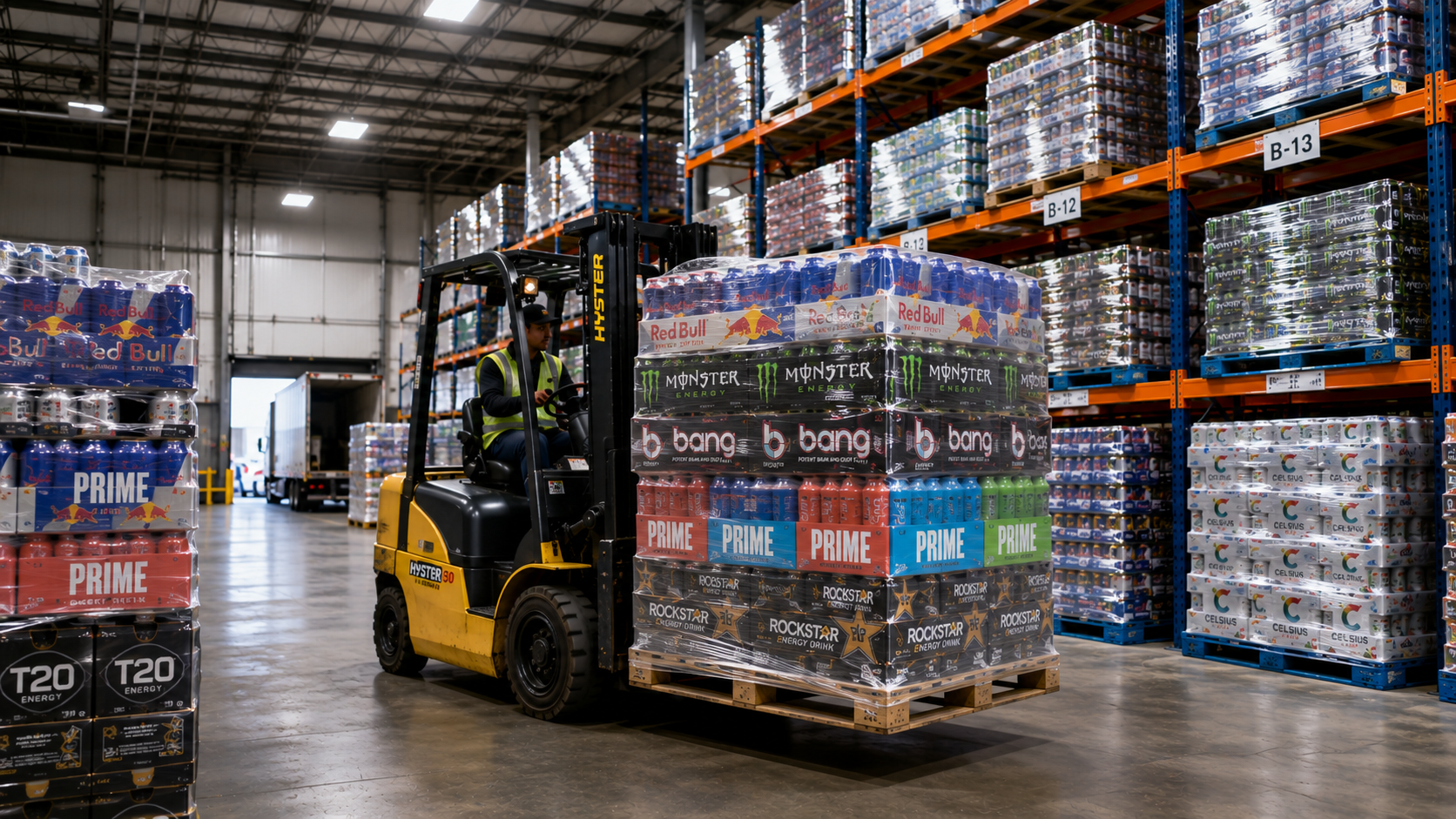
Wholesale energy drinks flow into several distinct commercial channels, each with its own purchasing patterns, inventory requirements and consumer expectations. Understanding how product moves through each channel helps buyers recognize what supply structure works best for their business model and growth trajectory.
Convenience stores and gas stations account for a large share of total energy drink volume in the United States because of their high traffic frequency and impulse-friendly store layout. Supermarkets contribute significant volume through multi-pack and promotional purchasing. Vending accounts for steady, location-based repeat demand. Beverage distributors aggregate all of these downstream needs into larger wholesale purchase volumes that they then redistribute to their account base.
For buyers at each stage of this chain, the key consideration is alignment between order format and operational reality. A vending operator adding 20 new machines needs a different supply conversation than a regional distributor signing up 30 new retail accounts. Both are legitimate wholesale buyers, but their supply needs, lead times and pricing expectations differ in ways that a good wholesale supplier should be able to address directly.
Beverage Distributors and Wholesale Energy Drink Supply
Beverage distributors occupy a specific position in the energy drink wholesale supply chain. They are not buying for their own retail consumption. They are buying to resell and distribute across a territory of accounts, which means their supplier relationship has a different level of commercial importance than a single-site retailer.
A distributor that cannot source reliable energy drink supply loses accounts to competitors that can. A distributor that sources poorly priced product loses margin and cannot compete effectively at the retail level. The wholesale supplier relationship for a beverage distributor is a business-critical dependency, not a transactional convenience.
For beverage distributors evaluating wholesale energy drink partners, the most important questions are: Does the supplier have consistent product availability across the brands the distributor needs? Can the supplier fulfill pallet or truckload orders on a predictable schedule? Is communication clear and responsive when issues arise? Are pricing structures transparent and appropriate for distributor-level purchasing?
T20 Energy Drink USA LLC supports distributor-level buyers through the distributor program and the general Request Pricing process. Distributors can submit their product requirements, volume expectations and account territory details to receive relevant supply information.
How to Choose an Energy Drink Wholesale Supplier
Choosing the right energy drink distributor or supplier is one of the most operationally significant decisions a commercial buyer makes. Price is a factor, but price alone tells an incomplete story. A low quoted price from a supplier with inconsistent availability, poor communication or limited product range creates problems that erode the value of the initial savings.
A strong wholesale supplier provides clear product information, commercial ordering options, responsive communication, realistic lead times and a process that is built for business buyers rather than consumers. The supplier should also demonstrate familiarity with the commercial channels they serve. A supplier that understands the operational differences between a convenience store, a vending company and a regional beverage distributor is better positioned to provide relevant guidance and supply support.
Before committing to a wholesale energy drink supplier, commercial buyers should ask:
- Does the supplier support bulk, pallet or truckload orders at the volume we need?
- Is the ordering process clear and designed for business accounts?
- Are multiple energy drink brands available, including the brands our customers already purchase?
- Can the supplier fulfill repeat orders on a consistent schedule?
- Is there a direct way to request commercial pricing without retail-level friction?
- Does the supplier understand the specific requirements of our industry channel?
- What is the lead time for pallet or truckload delivery to our location?
- How does the supplier handle supply shortfalls or availability constraints?
T20 Energy Drink USA LLC supports commercial buyers through a structured request pricing process. Buyers provide product requirements, order volume, delivery destination and business type so the team can review the request and respond with relevant supply information. There are no consumer-level minimums or retail-style purchasing barriers.
Logistics, Warehousing and Distribution Considerations
Energy drink wholesale involves more than product selection. The logistical side of bulk and pallet purchasing requires planning to avoid delays, damaged goods, storage issues or inventory shortfalls that disrupt retail operations.
Buyers should evaluate their receiving capacity before placing larger orders. A single-location convenience store with limited back-stock space needs a different delivery approach than a distributor with a regional warehouse. A vending operator serving 40 machines across a city needs a different replenishment cycle than a supermarket planning a promotional endcap order.
Key logistics considerations for wholesale energy drink buyers:
- Delivery destination and address accessibility for freight vehicles
- Receiving hours and staffing for unloading
- Forklift or pallet jack availability for pallet deliveries
- Storage space and shelving capacity for received inventory
- Temperature considerations during transport and storage
- Product rotation planning to manage expiration dates
- Order frequency and replenishment cycle alignment with sales velocity
- Lead time from order placement to delivery
Demand forecasting is especially important for larger orders. Ordering too little causes stockouts, which means lost sales and frustrated retail customers. Ordering too much without sufficient sell-through creates cash flow pressure and storage problems, particularly for buyers with limited warehouse space. A supplier that helps buyers calibrate order size to their actual business reality is more valuable than one that simply processes whatever volume is submitted.
For buyers placing their first pallet or truckload order, starting with a conservative volume estimate and increasing based on confirmed sell-through is a lower-risk approach than front-loading inventory before demand is established. This is especially true when testing a new brand or flavor that has not previously been carried.
Factors That Influence Wholesale Energy Drink Pricing
Wholesale energy drink pricing is not fixed. It varies by brand, quantity, packaging format, product availability, delivery requirements and order type. A case price quoted for a small bulk order will differ from a pallet price, and a pallet price will differ from a full truckload quote. These differences are structural, not arbitrary. Larger volumes allow for more efficient logistics, better per-unit economics and stronger supply chain planning on both sides of the transaction.
Common factors that affect wholesale energy drink pricing:
- Brand name and market demand for the specific product
- Order quantity measured in cases, pallets or truckloads
- Pallet configuration and case count per pallet
- Delivery destination and freight distance
- Product availability at the time of order
- Flavor and SKU mix within the order
- Repeat order potential and account stability
- Payment terms and order lead time
This is why commercial buyers should not rely on generic online price lists. A published retail price or a third-party marketplace listing is not a wholesale quote. A real commercial quote reflects the buyer’s actual order size, product requirements, delivery address and business context. Buyers can use the Request Pricing page to submit their details and receive pricing relevant to their specific situation.
Energy Drink Industry Trends and Wholesale Opportunities
The U.S. energy drink category continues to grow because it serves a genuinely wide range of consumer needs. Caffeine and alertness remain the core functional drivers, but the reasons people buy energy drinks have expanded significantly. Sugar-free formulas, clean-label ingredients, fitness positioning, nootropic blends and flavor innovation are all driving category growth beyond the original base.
For wholesale buyers, these trends create specific opportunities to serve customers better and build stronger category revenue.
Growth of Sugar-Free and Functional Energy Drinks
Consumer attention to sugar intake, caloric content and functional ingredients has accelerated across the packaged beverage market. This shift has helped brands like Celsius grow from specialty fitness channels into mainstream convenience and supermarket distribution. Wholesale buyers that carry both traditional high-caffeine energy drinks and functional or low-sugar alternatives serve a broader customer base and avoid leaving revenue on the table from health-oriented shoppers who would otherwise bypass the energy drink cooler.
For convenience stores and vending operators in particular, adding two or three functional energy SKUs alongside core Monster and Red Bull lines is a low-risk way to capture incremental sales from consumers who would otherwise choose water, tea or no purchase at all.
Sustained Convenience Store Demand
Convenience stores remain the strongest retail environment for energy drink velocity in the United States. The combination of high foot traffic, quick purchase behavior and strong cooler visibility creates consistent demand that is difficult for other retail formats to match. For wholesale buyers in the convenience channel, energy drink supply continuity is not a nice-to-have. It is a non-negotiable operational requirement.
Buyers managing multi-location convenience store groups should think about energy drink supply at a portfolio level, coordinating purchasing across sites to access better pricing, reduce administrative overhead and ensure consistent availability at each location.
Flavor Variety and SKU Range
Energy drink consumers are not monolithic. Some want the original green Monster. Others want Watermelon Red Bull Sugarfree. Others want Celsius Peach Vibe or a new limited-edition flavor they have not seen before. Wholesale buyers that stock a thoughtful range of flavors across two or three core brands give their retail customers more reasons to choose their store over a competitor.
For vending operators, flavor rotation is a practical sales tool. Swapping in a new flavor alongside proven sellers keeps the machine relevant to regular users and encourages trial from buyers who have not previously purchased that brand.
Vending and Workplace Demand
Energy drinks perform consistently in vending because the purchase need is tied to functional situations, alertness during a long warehouse shift, focus during a study session or a pick-up between delivery runs. These are reliable, repeat-purchase triggers. For vending companies, compact can formats and established brand names minimize friction and support steady machine revenue.
As workplace vending evolves toward healthier options, functional energy drinks with cleaner ingredients provide vending operators a way to serve both traditional energy drink buyers and newer health-oriented consumers from the same machine footprint.
Distributor-Level Opportunity Across Multiple Channels
Regional beverage distributors are positioned to benefit from energy drink wholesale because demand exists across every commercial channel in their territory. Convenience stores, gas stations, supermarkets, gyms, vending operators and independent retailers all need supply. A distributor with reliable access to major energy drink brands and the ability to source pallet or truckload quantities can build a strong and recurring revenue stream from energy drink distribution alone.
The key for distributors is securing a wholesale supply partner that understands multi-account logistics and supports the distributor’s ability to fulfill downstream commitments without interruption.
Why Commercial Buyers Work With T20 Energy Drink USA LLC
T20 Energy Drink USA LLC is built for commercial energy drink buyers across the United States. The company supports wholesale supply for multiple buyer types, including convenience stores, gas stations, supermarkets, vending companies, beverage distributors, retail chains and large-volume commercial buyers operating at any scale.
The T20 supply model focuses on practical B2B purchasing rather than consumer-level retail transactions. Buyers are not navigating a consumer checkout process or retail website. They are submitting commercial requests through a process designed for business accounts. The goal is to make energy drink sourcing straightforward for buyers that need volume, brand variety and supply they can count on.
Commercial buyers working with T20 can request:
- Wholesale energy drink supply across major brands
- Bulk energy drink orders for smaller commercial buyers
- Pallet energy drink supply for retailers and regional distributors
- Truckload energy drink orders for high-volume buyers
- Brand-specific sourcing for Monster, Red Bull, Celsius, Prime and other major labels
- Distributor program information for buyers looking to build an energy drink distribution business
- Support for buyers across convenience stores, gas stations, supermarkets, vending and beverage distribution
To begin the process, visit the Request Pricing page and submit your product requirements, order volume, delivery destination and business type. The T20 team reviews each request and responds with supply information relevant to your specific buying situation.
Request Wholesale Energy Drink Pricing
Need bulk, pallet or truckload energy drink supply for your business? T20 Energy Drink USA LLC works with convenience stores, gas stations, supermarkets, vending companies, beverage distributors and commercial buyers across the United States.
Frequently Asked Questions About Energy Drink Wholesale USA
What is energy drink wholesale?
Energy drink wholesale is the commercial purchase of energy drinks in larger quantities for resale, distribution or business use. Buyers purchase by case, bulk quantity, pallet or truckload depending on their volume requirements, storage capacity and customer base.
Who buys wholesale energy drinks?
Wholesale energy drinks are purchased by convenience stores, gas stations, supermarkets, vending companies, beverage distributors, retail chains, gyms, offices, event suppliers and commercial buyers across multiple industries and channels.
Can I buy energy drinks by the pallet?
Yes. Pallet ordering is one of the most common formats for commercial energy drink purchasing. It suits retailers, vending operators, gas stations, supermarkets and distributors that need higher volume than standard retail quantities while keeping logistics manageable. Buyers should confirm receiving capacity and handling equipment before placing a pallet order.
Does T20 supply truckload energy drinks?
T20 Energy Drink USA LLC supports commercial buyer requests for bulk, pallet and truckload energy drink supply. Truckload orders are most appropriate for distributors, large retail buyers and commercial operators with high-volume demand and the warehouse capacity to receive and rotate large inventory positions.
What brands can wholesale buyers request?
Buyers may request information about major energy drink brands including Monster Energy, Red Bull, Celsius, Prime Energy, Rockstar, Bang and T20 Energy Drink, subject to availability and order requirements. Brand availability may vary based on order size and current supply.
How do I request wholesale pricing?
Commercial buyers request pricing by visiting the Request Pricing page and submitting business details, product requirements, order volume and delivery information. The T20 team reviews each submission and responds with relevant supply and pricing information for the buyer’s specific request.