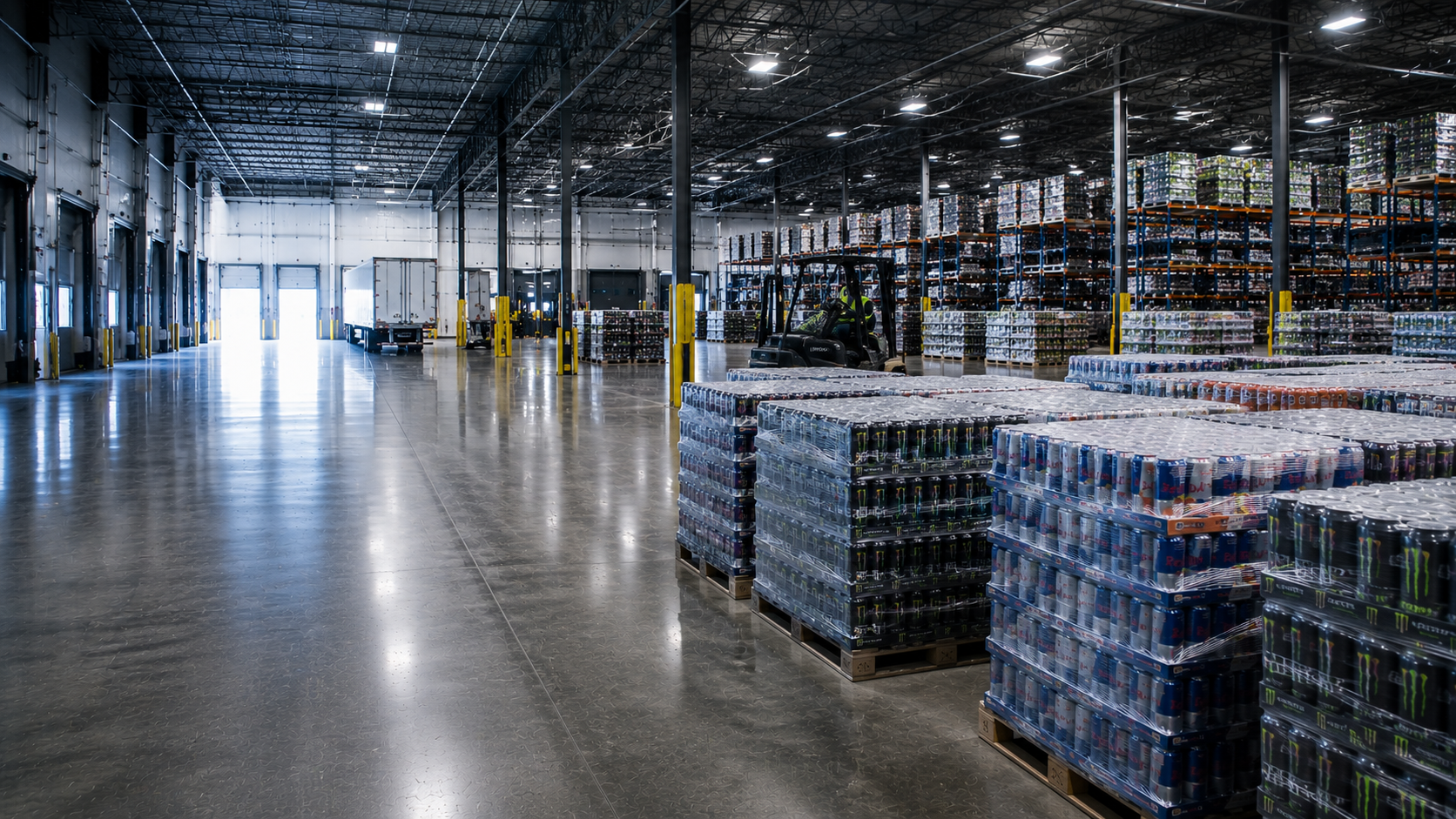

Every convenience store, gas station, supermarket, vending operation and retail chain that sells energy drinks depends on one thing above everything else: the product being there when the customer reaches for it. That supply continuity does not happen by accident. It is the result of a distribution chain that moves inventory from manufacturers and wholesale suppliers through to commercial buyers on a predictable, repeatable schedule. The energy drink distributor is the commercial entity that makes that movement possible for the businesses that cannot or do not source direct from manufacturers at scale.
For commercial buyers evaluating wholesale supply options, understanding what a distributor actually does, how distribution relationships work and what separates a reliable wholesale partner from an unreliable one is more valuable than any price comparison. This guide covers the full picture of energy drink distribution in the United States, from how the supply chain is structured to which buyer types it serves, how to evaluate potential supply partners and what to look for in a long-term distribution relationship.
Buyers who are also evaluating purchasing formats can review the energy drink wholesale USA overview for market context that complements the distributor-specific guidance here.
What Is an Energy Drink Distributor?
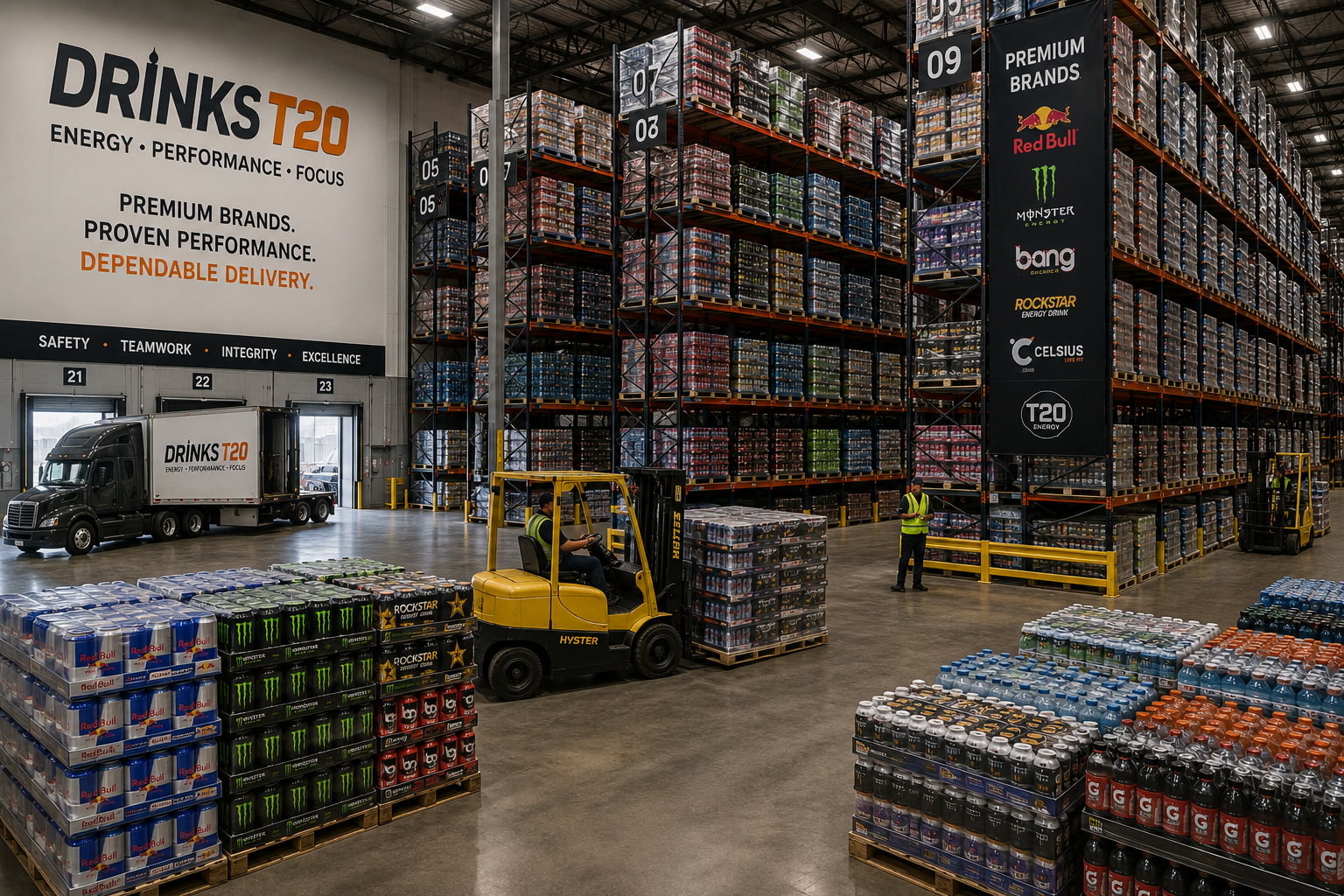
An energy drink distributor is a business that supplies commercial customers with energy drinks in volume for resale, vending or business use. The distributor sits between the manufacturer or wholesale supplier and the retail or commercial buyer, moving product through the supply chain and fulfilling the logistical function that most retail businesses cannot perform themselves.
Distributors are not retail businesses. They do not sell to consumers. Their customers are convenience stores, gas stations, supermarkets, vending operators, hospitality businesses, regional chains and other commercial accounts that need inventory delivered on a schedule they can depend on. The distributor’s commercial value is not just product access. It is the operational infrastructure to receive, store, manage and deliver that product in a format that serves business buyers.
Distribution functions typically include inventory management, order fulfillment, freight coordination, account management and ongoing replenishment support. Depending on the business model, a distributor may operate regionally, serving a specific territory, or at a larger scale supplying buyers across multiple states. Some distributors specialize in specific product categories or channels. Others supply a broad range of beverage categories across multiple retail formats.
For many commercial buyers, working with a reliable energy drink distributor simplifies the entire procurement process. Instead of managing multiple supplier relationships, coordinating separate freight arrangements and tracking different order cycles, the buyer works through one commercial relationship that handles the logistics and inventory management complexity on their behalf.
How Energy Drink Distribution Works
The energy drink supply chain begins at the manufacturer level, where brands like Monster, Red Bull, Celsius and Prime Energy produce product at scale. From there, product moves into the wholesale and distribution layer, where suppliers and distributors purchase or source inventory and prepare it for commercial delivery to retail and business accounts.
Once inventory enters the distribution network, it moves to warehouses or regional distribution centers where it is organized by brand, SKU and order destination. From there, orders are picked, packed and dispatched to commercial buyers based on their purchasing requirements and delivery schedules.
The purchasing format at each stage of this chain depends on the buyer’s volume and operational capacity. Smaller commercial accounts may receive bulk case orders. Mid-volume retailers and distributors typically use pallet shipments. High-volume buyers with warehouse infrastructure and confirmed downstream demand may operate on truckload supply cycles.
Effective distribution is not only about moving product from point A to point B. It requires inventory forecasting to prevent stockouts and overstock situations, logistics planning to coordinate freight on a schedule that matches buyer replenishment cycles, order accuracy to ensure the right product arrives in the right quantity, and communication to handle the exceptions and adjustments that are inevitable in any active supply relationship.
Businesses that establish strong distributor relationships consistently outperform those that source reactively and transactionally. The operational stability that comes from a reliable supply partner affects everything downstream, from cooler availability at a convenience store to route efficiency at a vending operation.
Who Works With Energy Drink Distributors?
Energy drink distributors serve a wide range of commercial customers. Each buyer type has different inventory requirements, different operational constraints and different expectations from a supply relationship. Understanding these differences helps both buyers and distributors align supply structures to operational reality.
Convenience Stores
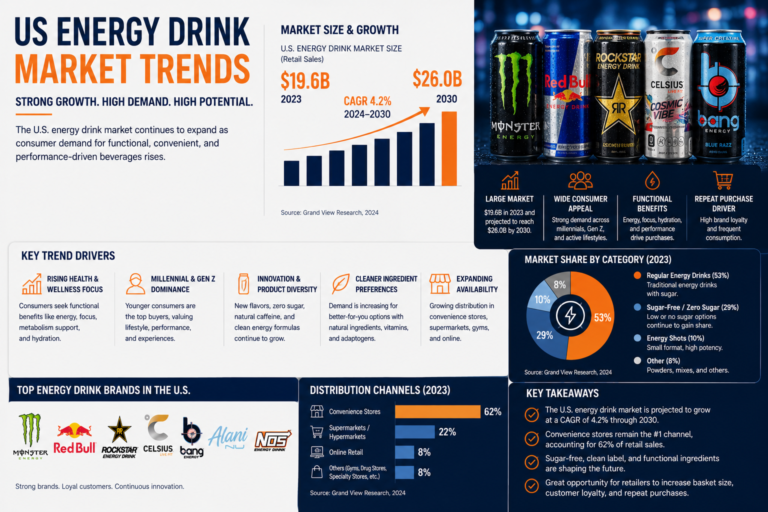
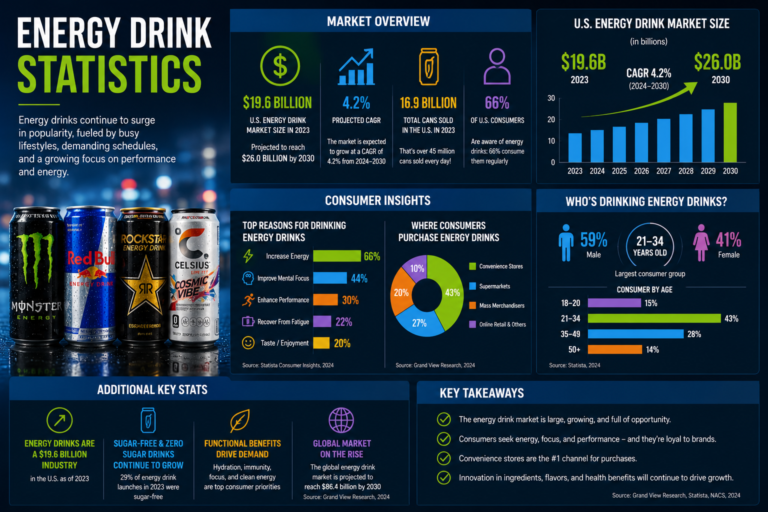
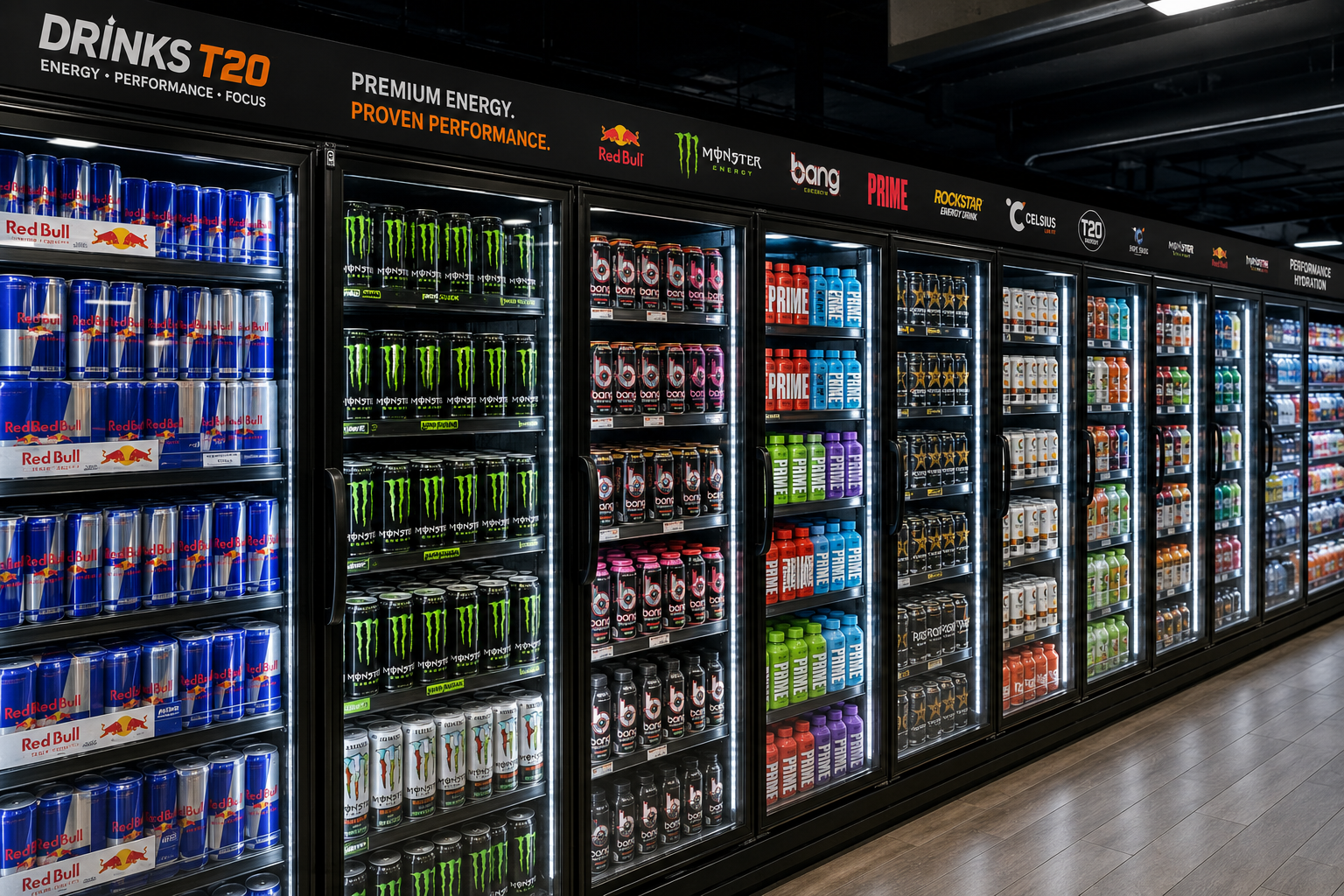
Convenience stores are the single highest-volume retail channel for energy drinks in the United States, accounting for over a quarter of all packaged beverage category dollars in the channel. Customers buy energy drinks at convenience stores throughout the day as impulse purchases tied to commutes, fuel stops, meal breaks and errands. For convenience store operators, energy drink supply is not a peripheral category. It is one of the most commercially important purchasing decisions they make.
A reliable distributor helps convenience store operators maintain cooler stock across multiple SKUs without the administrative burden of managing constant small orders. For multi-location operators, a distributor with the capacity to service several stores on a coordinated delivery schedule is especially valuable.
Gas Stations
Gas stations serve a customer base with a functional purchase motivation. Commuters, delivery drivers, truckers and road travelers stop for fuel and add an energy drink to the transaction because they need to stay alert, finish a shift or get through a long drive. That purchase behavior is consistent and predictable, which means gas station operators can plan their energy drink inventory with reasonable confidence in sell-through velocity.
Distribution partnerships help gas station operators maintain product availability across cooler doors and front-of-store displays without managing the logistics of frequent small supplier orders. For operators running multiple fuel sites, coordinated distribution across locations reduces procurement complexity significantly.
Supermarkets
Supermarkets manage energy drink purchasing within a broader category management framework that includes planogram requirements, promotional calendars, weekly sales reporting and shelf reset schedules. For supermarket buyers, the distributor relationship needs to be structured and dependable because supply failures create category problems that affect promotional commitments, planogram compliance and customer experience simultaneously.
A distributor who understands the operational cadence of supermarket purchasing, specifically the need for reliable delivery timing, accurate case counts and advance notice of any supply constraints, is a more valuable commercial partner than one who simply offers the lowest price on the next order.
Vending Companies
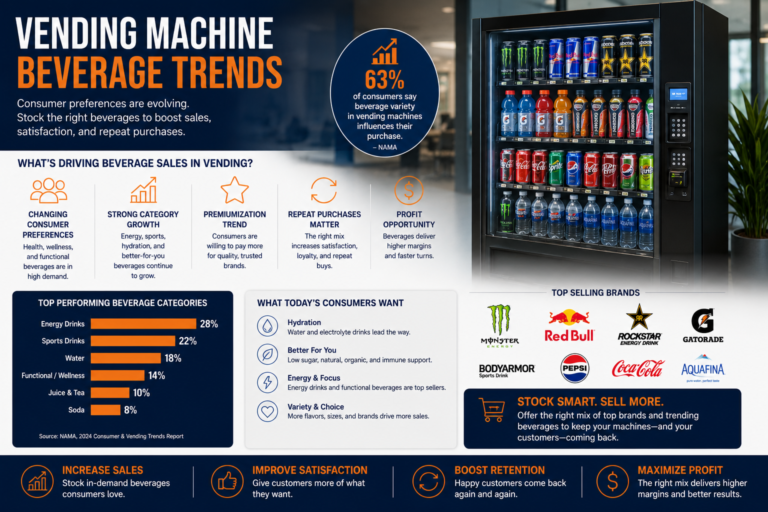
Vending operators depend on distribution because their business model is built on location-based consumption at scale. A vending company servicing 50 or more machines across offices, warehouses, gyms, universities and transit facilities needs a supply chain that supports route efficiency. Product needs to be available at the operator’s central warehouse when route drivers load their vehicles. A supply disruption at the warehouse level means empty machines across every account on that route.
Distribution partnerships for vending operators should prioritize consistent availability of proven SKUs, reliable delivery scheduling and the flexibility to add new products as machine performance data identifies demand.
Independent Retailers
Independent convenience stores, neighborhood markets, specialty retailers and small-format grocery operators often rely on distributors because they lack the purchasing scale to access manufacturer-direct supply and the warehouse infrastructure to manage large-format wholesale orders. A distributor provides these businesses with access to established brands at commercial pricing with delivery structures that fit their operational reality.
For independent retailers, the distributor relationship is often the difference between having a competitive beverage set and being unable to stock the brands their customers are already buying elsewhere.
Beverage Distributors
Regional beverage distributors sometimes work with larger wholesale suppliers to fill gaps in their product portfolio, access brands outside their primary supplier relationships or increase purchasing capacity during high-demand periods. These B2B supply relationships allow distributors to expand what they offer their downstream accounts without taking on new manufacturer agreements or changing their core supplier structure.
Benefits of Working With a Wholesale Energy Drink Distributor
The commercial case for working with an established wholesale distribution partner extends well beyond product access. For most commercial buyers, the operational benefits of a reliable distributor relationship outweigh the per-unit cost difference compared with sourcing transactionally from whoever offers the lowest spot price on a given order.
Inventory Consistency
The most fundamental benefit is having product available when customers want it. A distributor who fulfills orders accurately and on schedule prevents the stockouts that cost retailers sales and damage customer loyalty. For a gas station that sells 80 energy drinks per day, a two-day stockout on Monster Original is a measurable revenue loss. A reliable distributor prevents that outcome through predictable replenishment.
Consistent supply also supports promotional and seasonal planning. Retailers who know their inventory will arrive on schedule can make promotional commitments, plan endcap displays and coordinate marketing activity around confirmed stock availability rather than hoping supply arrives in time.
Simplified Procurement
Managing multiple supplier relationships for the same product category multiplies administrative work without adding value. A single wholesale distribution partner consolidates quotations, ordering, delivery coordination and account communication into one relationship. Purchasing teams spend less time managing supplier logistics and more time on merchandising, operations and customer-facing priorities.
For multi-location operators, centralized procurement through one distribution partner also standardizes the product mix across locations, simplifies accounting and gives management better visibility over total category spending.
Scalable Supply as the Business Grows
A distributor who supports bulk orders, pallet shipments and truckload deliveries within the same commercial relationship removes the need to change supply partners as purchasing volume increases. The buyer progresses through purchasing formats without disrupting their supply relationship, which maintains the operational continuity that has built up over time in the partnership.
This scalability matters most at the transition points, when a buyer moves from bulk to pallet purchasing or from pallet to truckload supply. A supplier who cannot support the next purchasing level forces the buyer to start a new supply relationship from scratch, losing the trust and operational familiarity that accumulated in the previous arrangement.
Operational Knowledge
Experienced distributors understand how commercial buyers in different channels actually operate. A distributor who has supplied convenience stores for years knows that cooler replenishment timing matters, that brand variety affects category performance and that the buyer’s biggest operational fear is running out of a top-selling SKU on a busy weekend. That operational knowledge shapes how a good distributor communicates, plans deliveries and responds when problems arise.
How to Choose the Right Energy Drink Distributor
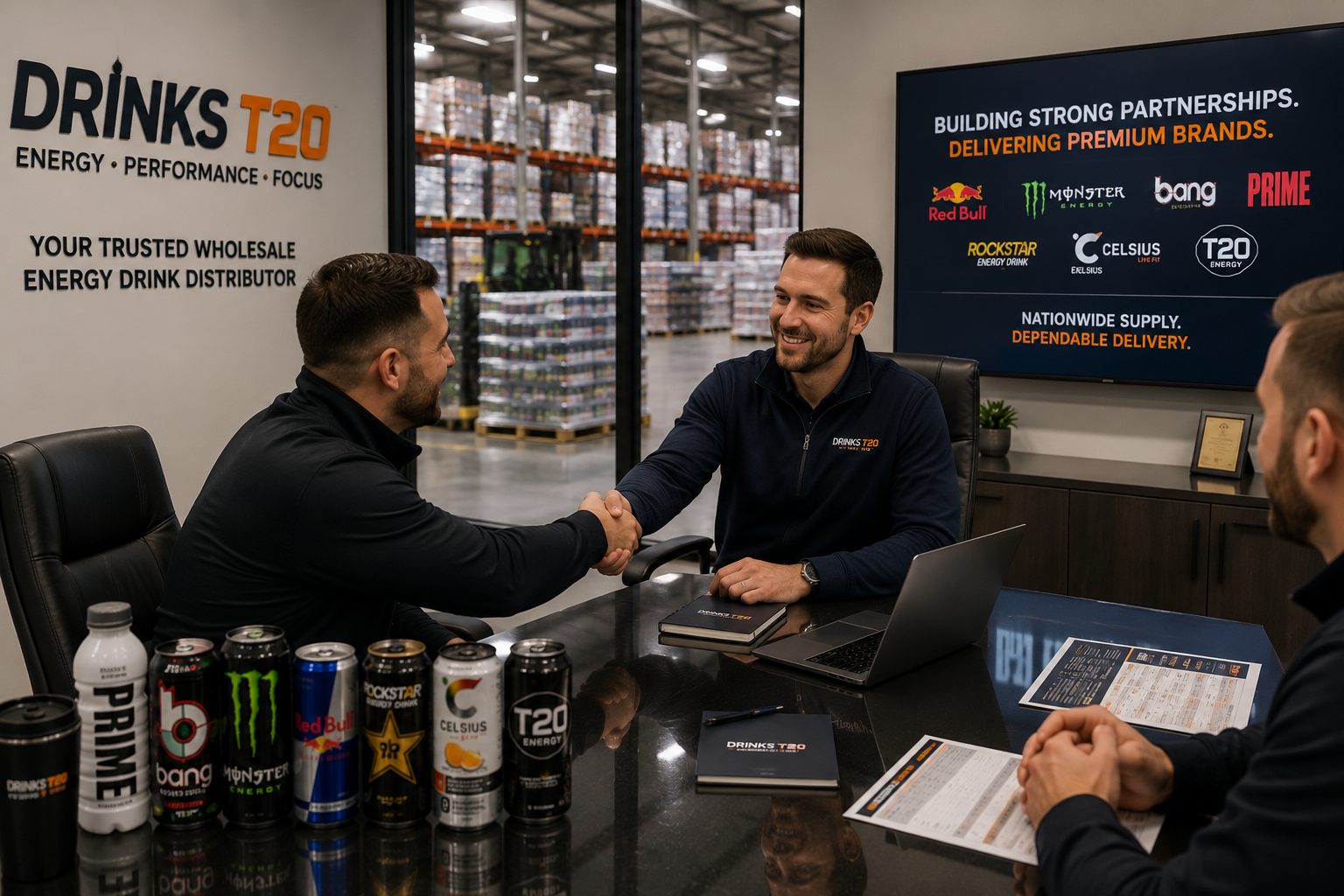
Distributor selection is a consequential decision because the relationship, once established, affects daily operations. A poor choice costs more than the difference between a good and bad per-unit price. It costs sales, operational disruption, management time and, in the worst cases, customer relationships.
The evaluation should go well beyond the initial quote. These are the factors that determine whether a distributor will actually serve your business well over time.
Commercial wholesale experience is the starting point. A distributor who primarily serves consumer buyers and offers larger quantities as an accommodation is not the same as one who is structured and experienced in B2B commercial supply. The processes, communication standards and operational expectations are different, and buyers who choose the wrong type of supplier quickly discover that difference.
Product availability across the brands your customers purchase is non-negotiable. A distributor who cannot reliably supply Monster, Red Bull and Celsius, or whatever core brands your retail environment demands, cannot serve your business regardless of how competitive their pricing appears on other SKUs.
Logistics capability matters at every purchasing scale. Can the supplier deliver to your location? Do they understand freight coordination for pallet or truckload deliveries? Can they work within your receiving hours and infrastructure? These practical questions determine whether the supply relationship works operationally, not just commercially.
Questions every commercial buyer should ask before committing to a distribution partner:
- Is this supplier structured for commercial B2B wholesale or primarily a consumer-facing business offering bulk discounts?
- Which brands and SKUs do they carry reliably, not just occasionally?
- Can they support bulk, pallet and truckload ordering within the same relationship?
- What are their realistic lead times for delivery to your specific location?
- How do they handle supply shortfalls, product substitutions or delivery scheduling changes?
- How responsive are they during the quotation process, and does that responsiveness reflect how they will communicate post-order?
- Can they provide references or demonstrate a track record with buyers in your channel?
- Will they be able to support your purchasing volume 12 months from now if your business grows?
The quality of communication during the pre-order evaluation is the clearest indicator of what the ongoing relationship will look like. Distributors who are slow to respond, vague about specifications or unable to answer straightforward commercial questions before the first sale rarely improve afterward.
Popular Energy Drink Brands Distributed Through Wholesale Channels
Brand selection in commercial energy drink purchasing should reflect the specific consumer demographics at the buyer’s retail locations or distribution accounts, not only general market popularity. That said, the most commonly distributed brands reflect broad consumer demand that applies across most commercial environments.
Monster Energy
Monster Energy is the most widely distributed energy drink brand in U.S. commercial channels. Its SKU range covers original formulas, Ultra sugar-free lines, Juice blends, Rehab recovery drinks and various limited and seasonal editions. Monster’s breadth means a buyer can stock multiple consumer segments from a single brand, which simplifies cooler management while covering a wide range of purchase motivations.
Red Bull
Red Bull carries some of the strongest brand equity in the global beverage market. Its 8.4oz original remains one of the most recognized single-serve beverage products sold in U.S. retail. The brand’s sugar-free and flavor extensions have expanded its appeal significantly, and its premium retail positioning supports stronger category margins compared with most competing products.
Celsius
Celsius represents the functional energy drink segment at its most commercially developed. It has moved from specialty fitness distribution into mainstream convenience, supermarket and vending channels by targeting consumers who want energy without the sugar content of traditional formats. For distributors and retailers, Celsius serves a consumer segment that Monster and Red Bull do not fully capture, making it an additive rather than competitive addition to most product mixes.
Prime Energy
Prime Energy built strong consumer interest among younger demographics and continues to perform in retail environments serving that audience. Distributors supplying accounts near schools, entertainment venues, gyms or youth-oriented retail formats should evaluate Prime based on the specific consumer profile at those accounts rather than general market positioning.
Rockstar and Bang
Rockstar and Bang serve the value-oriented and variety-seeking segments of the energy drink market respectively. Both brands fill meaningful positions in a well-rounded retail or distribution set, particularly for buyers managing price-sensitive accounts or looking to offer broader SKU variety without over-indexing on premium-priced brands.
Buyers exploring a broader product mix can review the complete energy drinks category to understand the full range of brands available through T20 Energy Drink USA LLC.
Common Mistakes Businesses Make When Choosing an Energy Drink Distributor
The mistakes that cost commercial buyers the most in distributor selection are rarely about choosing the wrong brand. They are about misreading the supplier relationship and optimizing for the wrong variables.
Selecting on Price Alone
A low quoted price from a distributor who cannot fulfill orders consistently is not a cost saving. It is a source of operational problems. Every stockout caused by a supplier’s inability to deliver costs more in lost sales and customer dissatisfaction than any per-unit saving on the original order. Evaluate total supply value, including reliability, communication and logistics capability, not just the headline price.
Ignoring Future Volume Requirements
Selecting a supplier based only on current purchasing volume is a short-term decision that creates medium-term problems. A distributor who supports small bulk orders but cannot scale to pallet or truckload supply forces the buyer to find a new supply partner at the worst possible time, when the business is growing and operational stability matters most. Choose a supplier who can serve your business at its next stage, not only at its current one.
Underestimating Logistics Requirements
Distribution is a logistics operation. A supplier who cannot coordinate freight to your location, does not understand your receiving infrastructure or cannot deliver within your operational hours is not a practical supply partner regardless of their product range or pricing. Logistics compatibility should be confirmed as part of the supplier evaluation, not discovered after the first delivery attempt.
Purchasing Without Inventory Planning
Ordering from a distributor without understanding your own sell-through data leads to two problems: stockouts when you under-order and capital tied up in slow-moving inventory when you over-order. Both are avoidable with basic inventory tracking. Before placing a commercial order, understand your weekly sales velocity by SKU and build your order quantities around confirmed demand, not estimates.
Carrying Too Narrow a Product Mix
Consumers within the energy drink category have different preferences. A retailer who stocks only Monster Original misses the Celsius buyer, the Red Bull loyalist, the sugar-free consumer and the shopper looking for something new. A well-planned product mix across three or four brands captures more of the category spend available at the location without significantly increasing inventory complexity.
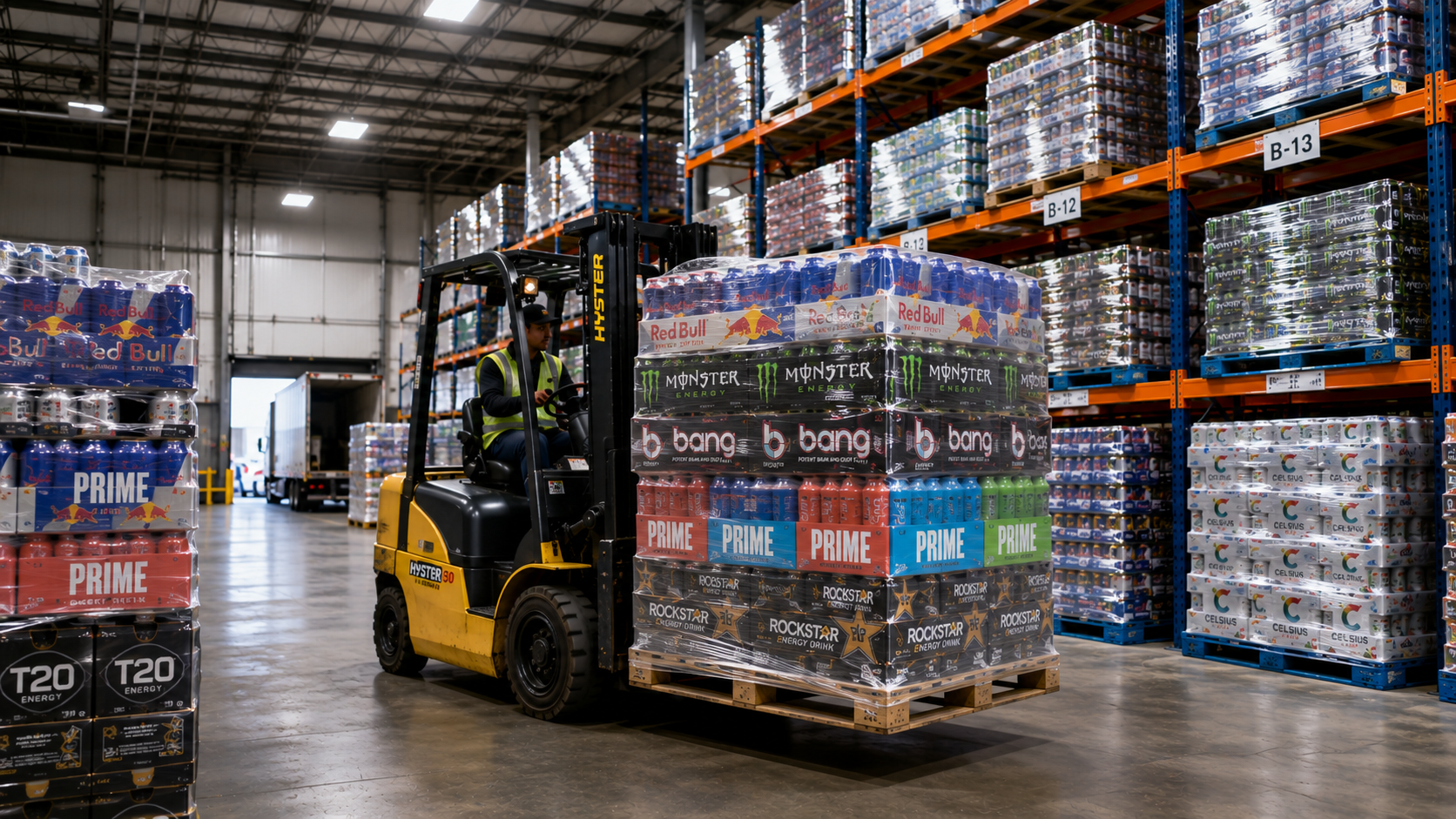
Distribution Logistics and Inventory Planning
The logistics side of a distributor relationship deserves as much attention as the product and pricing side. How product is delivered, when it arrives, in what format and what happens when something goes wrong are all operational questions that affect day-to-day business performance more directly than per-unit cost differences.
Commercial buyers should evaluate these logistics factors before finalizing a distribution partnership:
- Delivery frequency and replenishment cycle alignment with actual sales velocity
- Lead time from order placement to delivery and how that affects reorder timing
- Freight format compatibility with the buyer’s receiving infrastructure
- Order accuracy standards and how discrepancies are handled
- Communication protocols for delivery scheduling, delays and supply constraints
- Product rotation requirements and how the distributor supports FIFO compliance
- Flexibility to adjust order quantities as demand fluctuates seasonally
Multi-location operators benefit from coordinating inventory planning across their network rather than managing each site independently. Receiving a consolidated order at a central point and distributing internally to each location reduces inbound freight events, standardizes the product mix across sites and gives the procurement team better visibility over total inventory position. A distributor who understands and supports centralized purchasing for multi-location buyers is more valuable to that buyer than one who treats each site as a separate account.
Building a Reliable Energy Drink Supply Chain
A reliable supply chain is built through deliberate decisions, not good fortune. Commercial buyers who treat wholesale distribution as an ongoing operational partnership rather than a series of transactional purchases consistently achieve better inventory performance, stronger supplier relationships and more predictable purchasing outcomes.
The practices that distinguish well-managed commercial energy drink supply chains:
- Forecast inventory requirements using actual sales data, not estimates or general market figures
- Plan orders ahead of seasonal demand peaks with enough lead time to receive and stage inventory before demand increases
- Maintain regular communication with the distribution partner about upcoming promotions, new location openings or demand changes that will affect order requirements
- Monitor inventory turnover by SKU and adjust future orders to reflect confirmed performance rather than assumptions
- Review warehouse capacity before increasing purchasing volumes to avoid receiving more product than the storage infrastructure can handle
- Carry a balanced mix of established brands and functional or emerging options to serve the full range of consumer demand at the location
Businesses that build purchasing schedules around historical data and maintain open communication with their distributor reduce emergency orders, prevent stockouts and improve the operational predictability that supports growth.
Why Distribution Relationships Matter Long Term
A distributor who has supplied your business for 12 months understands your purchasing patterns, your seasonal peaks, your brand preferences and your operational constraints in ways that a new supplier does not. That accumulated understanding has real commercial value. Orders are processed faster because the supplier knows what you buy. Issues are resolved more efficiently because the communication relationship is established. Supply adjustments happen with less friction because both parties understand each other’s operational requirements.
Long-term distributor relationships also provide more resilience when market conditions change. When a high-demand brand faces supply pressure or a new product creates unexpected demand at retail, buyers with established supplier relationships are better positioned to access inventory than transactional buyers competing on the spot market without any relationship equity.
For growing businesses, the right distribution partnership scales alongside the operation. A convenience store group expanding from 5 to 15 locations, a vending operator doubling their machine count or a regional distributor adding 20 new retail accounts all have one thing in common: they need a supply partner who can grow with them rather than one they have to replace at each stage of expansion.
Why Businesses Work With T20 Energy Drink USA LLC
T20 Energy Drink USA LLC is a Margate, Florida-based wholesale energy drink supplier operating as a B2B commercial supply partner for buyers across the United States. The company does not serve consumer-level purchasing. Every part of the process, from the pricing request to delivery coordination, is structured for commercial accounts with real operational requirements.
T20 supports commercial buyers across the full range of purchasing formats. Buyers can begin with bulk energy drink orders, progress to pallet supply and move into truckload purchasing within the same supply relationship as their business grows. The distributor program supports buyers operating at multi-account distribution scale with supply structures designed specifically for that purchasing level.
Commercial customers T20 works with include convenience stores, gas stations, supermarkets, vending companies, beverage distributors, retail chains and commercial procurement teams. Each pricing request is reviewed individually against the buyer’s product requirements, order volume, delivery destination and business context. Buyers receive pricing that reflects their actual commercial situation.
Request Wholesale Energy Drink Distribution Pricing
Whether you operate a convenience store, manage multiple retail locations or distribute beverages to commercial accounts, T20 Energy Drink USA LLC supports wholesale energy drink supply across the United States. Submit your product requirements, estimated purchasing volume and delivery location to receive a customized wholesale quotation from the T20 team.
Frequently Asked Questions About Energy Drink Distributors
What does an energy drink distributor do?
An energy drink distributor supplies commercial customers with energy drinks in volume for resale or business use. Distribution functions include inventory management, order fulfillment, freight coordination and ongoing replenishment support. Distributors serve as the operational link between wholesale suppliers and the retail or commercial accounts that sell energy drinks to consumers.
Who typically works with energy drink distributors?
Convenience stores, gas stations, supermarkets, vending operators, beverage distributors, retail chains, independent retailers and commercial organizations across many industries work with energy drink distributors. Any business that needs consistent commercial energy drink supply benefits from a distribution partnership rather than transactional purchasing.
Can distributors supply multiple energy drink brands?
Many wholesale distributors carry multiple brands depending on product availability and commercial purchasing requirements. For commercial buyers, access to multiple brands through a single distributor relationship simplifies procurement and allows the buyer to carry a broader product mix without managing multiple separate supplier relationships.
How do businesses choose the right distributor?
Evaluate commercial wholesale experience, inventory consistency across the brands you need, logistics capability for your specific location and receiving setup, communication quality during the quotation process and the supplier’s ability to support your purchasing volume as your business grows. Do not select based on price alone.
Can distributors support recurring wholesale orders?
Yes. Recurring commercial orders are the standard purchasing model for most established distributor relationships. A buyer who establishes a regular replenishment schedule with a reliable distributor achieves better inventory predictability than one who places orders reactively when stock runs low.
What purchasing formats are available through T20 Energy Drink USA LLC?
T20 supports bulk energy drink orders, pallet shipments, truckload deliveries and distributor purchasing programs for commercial buyers across the United States. Buyers can request pricing for any of these formats through the Request Pricing page by submitting product requirements, order volume and delivery information.
How does distribution help businesses manage inventory more effectively?
A reliable distributor delivers product on a predictable schedule that buyers can plan around. This predictability allows commercial buyers to maintain leaner inventory positions without stockout risk, because they know when the next replenishment will arrive. It also reduces emergency ordering, which is typically the most expensive and disruptive way to manage inventory shortfalls.
What is the difference between a wholesale supplier and a beverage distributor?
The terms are sometimes used interchangeably but describe different operational models. A wholesale supplier sources and sells product in commercial quantities. A beverage distributor typically also manages route delivery, account servicing and territory-based supply to retail customers. In practice, many commercial buyers use the term distributor to describe any B2B wholesale supply partner. The most important distinction for buyers is whether the supplier is structured for commercial accounts, regardless of the label they use.