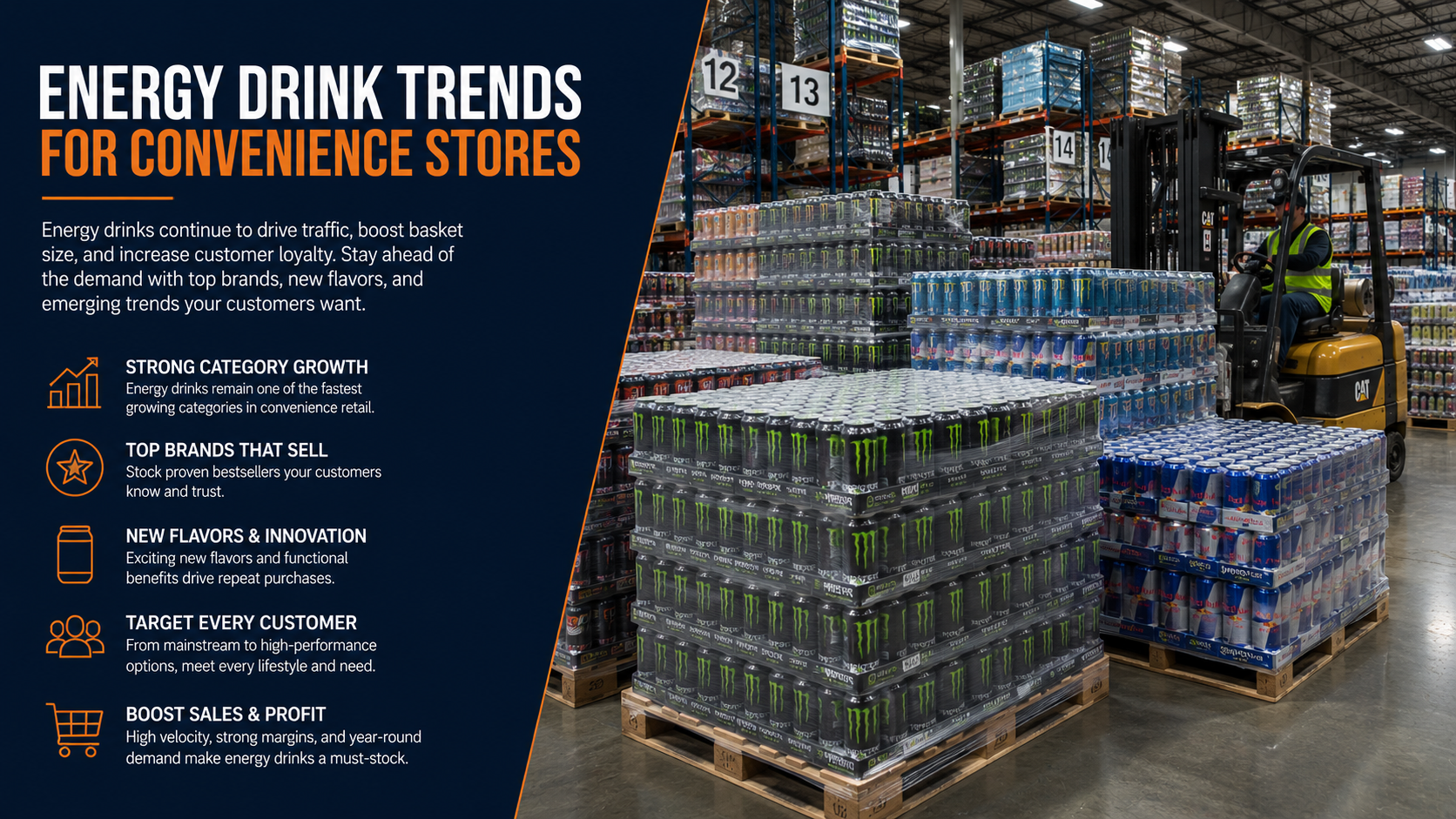

Energy drinks are the most commercially important packaged beverage category in U.S. convenience retail, and that position did not happen by accident. Convenience stores sell energy drinks because the product fits the environment perfectly: fast transaction, high visibility, strong brand recognition, impulse-friendly format and consistent consumer demand across every daypart. The customer stopping for fuel at 6am, the delivery driver grabbing a drink between stops at noon and the student walking in at 10pm are all potential energy drink buyers. No other beverage category serves that range of purchase occasions as reliably.
For convenience store owners and category managers, the strategic question is not whether to carry energy drinks. It is how to carry them well. Which brands, which SKUs, how many facings, how the cooler is organized, when to reorder, how much to hold in back stock and how to respond when consumer preferences shift toward sugar-free, functional or emerging brands. These decisions affect revenue every day, and getting them right requires more than stocking whatever the distributor drops off.
This guide covers the full picture of convenience store energy drink performance: consumer buying behavior, merchandising strategy, inventory planning, wholesale purchasing and supplier selection. Retailers who want broader wholesale context alongside this channel-specific guidance can review the energy drink wholesale USA overview.
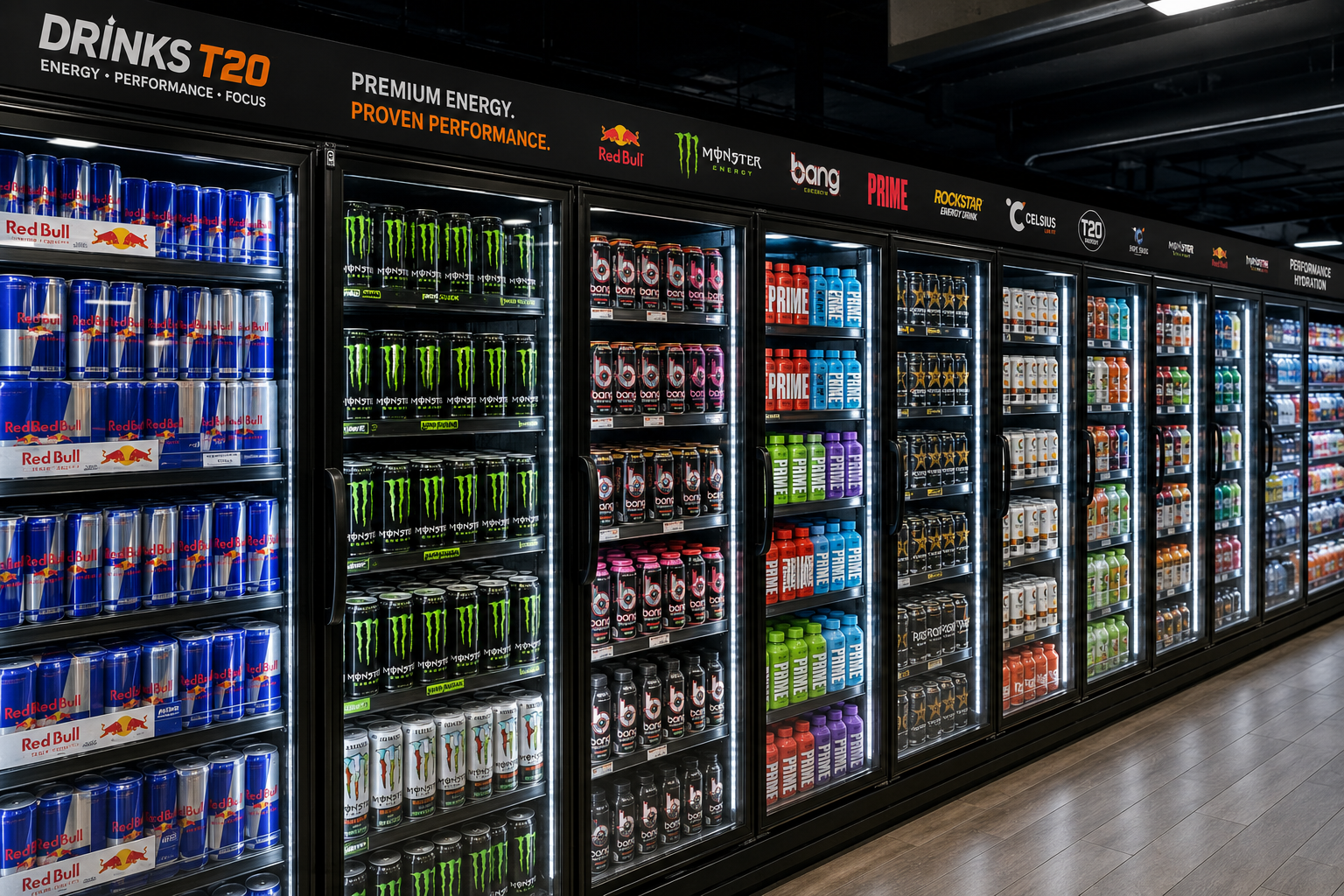
Why Energy Drinks Drive Convenience Store Revenue
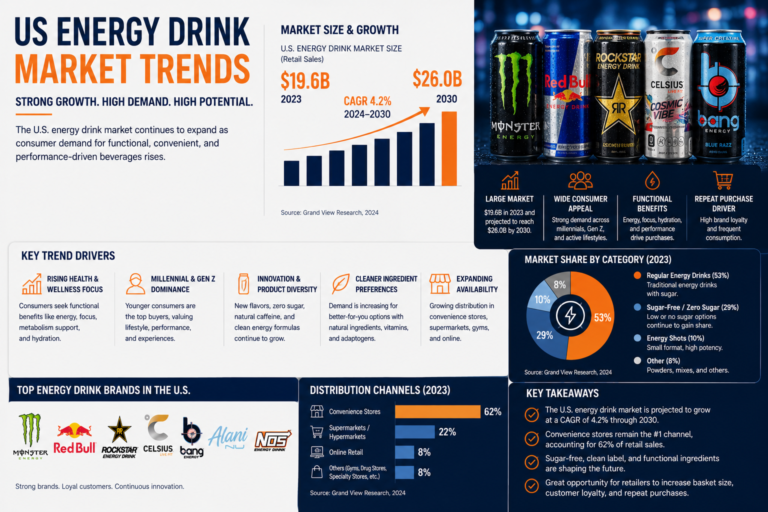
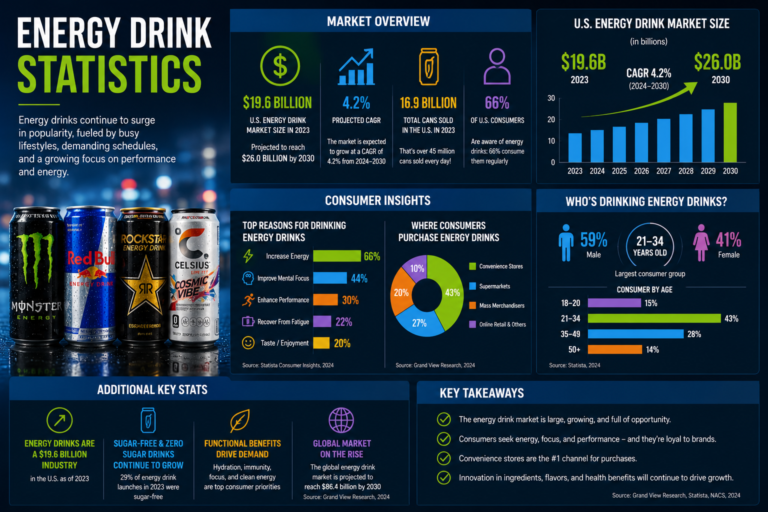
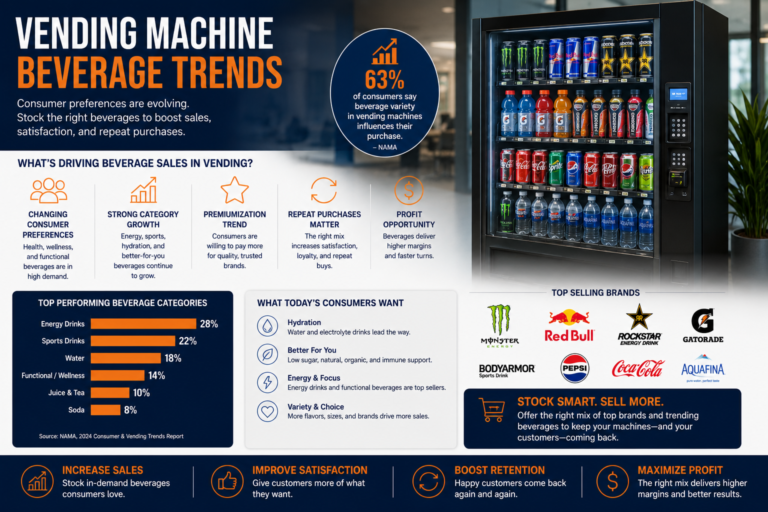
The numbers that define energy drink performance in convenience retail are significant. The National Association of Convenience Stores reported that energy drinks accounted for 27.8% of all packaged beverage category dollars in U.S. convenience stores in 2024. That is more than any other single beverage segment, including water, carbonated soft drinks and sports drinks. It reflects purchase behavior that has become structural, not cyclical.
Several characteristics make energy drinks unusually well suited to convenience retail. They are purchased repeatedly by the same consumers, often multiple times per week. They are impulse-friendly, meaning a customer who came in for something else will frequently add an energy drink when they pass the cooler. They carry strong brand identity, so consumers recognize the product from a distance and make quick decisions without deliberating. And they perform consistently across seasons, unlike some beverage categories that spike in summer and fall off in cooler months.
For convenience store operators, that combination of repeat purchasing, impulse conversion, brand recognition and year-round demand makes the energy drink cooler one of the highest-return areas of the store to manage well. A retailer who treats it as a set-and-forget category leaves money on the table every day. A retailer who actively manages it, right brands, right facings, fully stocked, well organized, drives stronger category revenue with no additional floor space.
The Grand View Research estimate of the U.S. energy drinks market at approximately $25 billion in 2024 with continued growth projected through 2030 reinforces that the category’s commercial importance is not declining. Convenience store operators who invest in managing energy drinks well are investing in a category with a confirmed long-term demand trajectory.
Understanding Today’s Energy Drink Consumer
The consumer profile for energy drinks in convenience stores is broader than it was a decade ago. The category grew initially on the back of younger male consumers, but that demographic is no longer the primary definition of who buys energy drinks at a convenience store. Today the buyer base spans age groups, occupations and purchasing motivations in ways that affect how retailers should stock and merchandise the category.
Morning commuters are among the most consistent energy drink buyers in convenience retail. The stop-for-fuel, grab-a-drink transaction is a daily routine for a significant segment of the commuter population. For these buyers, brand familiarity matters more than novelty. They want the product they always buy to be in stock and easy to find.
Professional drivers represent another high-frequency segment. Truck drivers, delivery personnel, rideshare operators and commercial transport workers purchase energy drinks as a functional work tool. Stores located near freight corridors, distribution centers, logistics parks or highway interchange points serve a disproportionate share of this consumer. Their purchase frequency is high and their brand loyalty tends to be strong.
Students are a meaningful segment for stores near colleges, universities or community colleges. This group skews toward variety, is more likely to try new brands and flavors and has contributed significantly to the growth of functional energy drinks like Celsius in convenience retail.
Shift workers in healthcare, manufacturing, emergency services, hospitality and security purchase energy drinks at non-traditional hours. Convenience stores with extended or 24-hour operating hours serve this group during periods when other retail formats are closed. Late-night and early-morning energy drink velocity at these locations is often stronger than operators realize until they look at hourly sales data.
Impulse buyers are present across all demographics. A customer who came in for a sandwich, a phone charger or lottery tickets will frequently convert to an energy drink purchase if the cooler is visible, well stocked and easy to navigate. This is why cooler placement and organization are not aesthetic decisions. They are revenue decisions.
Energy Drink Consumer Segments by Location Type
One of the most practically useful frameworks for convenience store energy drink management is thinking about consumer segments by location type rather than general demographics. The right product mix for a store depends heavily on who shops there, and that varies significantly by location.
Highway and Travel Corridor Stores
These locations serve long-distance drivers, truckers, road-trippers and travelers. Core energy drinks like Monster Original, Red Bull and Rockstar perform strongly here because the consumer is buying for function, not exploration. Large can formats and value multi-packs also perform well because the buyer may be stocking up for a long drive rather than making a single-serve purchase.
Urban and Commuter Stores
Urban stores near transit hubs, office districts or dense residential areas serve morning commuters, lunch-break shoppers and after-work traffic. This consumer base is more likely to engage with premium brands, sugar-free options and functional beverages. Red Bull’s slim can format, Celsius and Monster Ultra all tend to perform well in these environments.
Campus and University-Adjacent Stores
Stores near educational institutions should carry a broader variety of brands and flavors than most other location types. Students are more willing to try new products and more influenced by brand visibility in social and digital contexts. Prime Energy, Celsius and newer functional brands perform disproportionately well in this environment compared with a highway travel center.
Industrial and Warehouse District Stores
These locations serve shift workers, warehouse staff, construction crews and tradespeople. High-caffeine, value-accessible energy drinks perform well. Brand loyalty is typically strong in this consumer segment, and variety matters less than reliable availability of the specific products the customer always buys.
Suburban Residential Stores
Suburban convenience stores serve a mixed consumer base across demographics. The product mix should reflect local household income levels, proximity to gyms or fitness facilities and whether the store is near schools. A suburban store next to a Planet Fitness should carry more Celsius than one located in a strip mall anchored by a grocery store in a mature residential neighborhood.
Merchandising Strategies That Increase Energy Drink Sales
Product selection gets the category right in principle. Merchandising gets it right in practice. A convenience store can carry the correct brands and SKUs and still underperform if the cooler is poorly organized, partially stocked or positioned in a low-traffic area of the store. These merchandising principles apply across location types and store sizes.
Cooler Placement and Traffic Flow
The energy drink cooler should be positioned along a natural traffic path within the store, not tucked into a corner or placed behind other fixtures. Customers moving from the entrance toward the checkout counter or the fountain drink station are the highest-conversion traffic in the store. An energy drink cooler in that path captures both intentional buyers and impulse converters.
Door-count matters in multi-door cooler configurations. Energy drinks typically warrant more door space than their share of SKU count might suggest, because the category drives disproportionate revenue relative to its physical footprint.
Eye-Level Shelf Placement
Eye-level positions in the cooler generate the most visual engagement and the highest conversion rates. Core bestsellers, Monster Original, Red Bull 8.4oz, Celsius Sparkling Orange, should occupy eye-level positions as default. Newer SKUs or lower-velocity items can be introduced at higher or lower positions where they have visibility without displacing proven performers from prime placement.
Reviewing cooler position assignments quarterly against sales velocity data is a straightforward practice that most retailers underutilize. A SKU that has moved from slow to fast since the last planogram reset should move to a better position. A SKU that has slowed should yield its prime position to a stronger performer.
Brand Grouping and Cooler Organization
Grouping products by brand within the cooler creates a cleaner shopping experience. A consumer loyal to Monster can scan the Monster section and find their preferred flavor in a few seconds. A consumer open to trying something new can compare options without having to scan an unorganized mix of brands across the same cooler space.
Clear organization also reduces replenishment errors. Staff restocking the cooler are less likely to place product in the wrong position when the layout is logical and consistent.
Full Cooler Presentation
A partially empty cooler communicates poor inventory management to the consumer, even when the shortage is temporary. Customers who see a half-empty cooler are less likely to engage with the category than those who see a fully faced, well-stocked display. Pulling product forward to fill the visible face of each shelf when inventory is running low is a basic practice that significantly affects the visual impact of the cooler on a customer who may be deciding in a few seconds whether to purchase.
Secondary Display Placement
Energy drinks can also be merchandised outside the primary cooler. A small secondary display near the checkout counter, a floor stack of a promotional SKU near the entrance or a cross-merchandising placement near snack foods or coffee all create additional purchase opportunities beyond the main cooler interaction. These secondary placements are particularly effective for single-serve formats and promotional pricing.
Understanding Seasonal Purchasing Patterns
Energy drink demand in convenience stores follows recognizable seasonal patterns that retailers can plan around rather than react to. Understanding these patterns allows buyers to adjust inventory ahead of demand shifts rather than running short during peak periods.
Summer months drive higher overall beverage volume across most convenience store locations, including energy drinks. Warmer weather, increased travel activity, more outdoor work and greater foot traffic during daylight hours all contribute to stronger summer performance. Retailers who increase inventory positions heading into May and maintain them through September are less likely to experience the stockouts that lose sales during peak travel weekends and hot-weather periods.
Holiday travel periods, Memorial Day, Fourth of July, Labor Day and the Thanksgiving-to-New-Year stretch, generate traffic spikes at highway corridor and travel center locations. Operators in these environments should plan inventory around confirmed travel calendar dates rather than discovering the demand spike after it has already started.
Back-to-school periods in August and September drive increased demand at stores near universities, community colleges and high schools. This is the period when functional energy drinks like Celsius tend to show their strongest velocity spikes in campus-adjacent stores, as students return and establish their purchase routines for the semester.
Seasonal patterns worth building into purchasing schedules:
- Summer travel season driving higher highway corridor demand from May through September
- Back-to-school periods boosting campus-adjacent store performance in August and September
- Holiday travel weekends creating short-term spikes at travel center and highway locations
- Winter months often generating stronger demand at 24-hour and shift-worker-serving locations as cold-weather work continues year-round
- Promotional campaign periods from major brands that drive category attention and trial across all location types
Inventory Planning for Convenience Store Energy Drinks
Inventory management is where the difference between a well-run energy drink category and a poorly run one shows up most clearly in the numbers. Too little inventory means stockouts that lose sales and push customers toward competitors. Too much inventory ties up cash, occupies limited back-stock space and creates rotation pressure as product ages.
The starting point for good inventory planning is knowing your actual sell-through velocity by SKU. How many units of Monster Original does your store sell on an average weekday? How does that change on weekends? What happens to Celsius velocity during the first week of September when students return? These numbers exist in your point-of-sale data and are more reliable than any general market benchmark for planning your specific store’s inventory.
Key inventory management practices for convenience store energy drink categories:
- Set reorder points for each SKU based on actual sell-through velocity, not estimated demand
- Review weekly sales reports by brand and flavor to identify velocity changes before they become stockout situations
- Implement FIFO rotation as a standard cooler restocking procedure to prevent older product from sitting behind new arrivals
- Track new product performance separately for the first 60 days after introduction to make informed decisions about whether to continue carrying, adjust quantity or discontinue
- Plan ordering cycles around your supplier’s lead time so reorders arrive before inventory falls below the reorder threshold
- Increase inventory positions ahead of confirmed high-demand periods, not reactively after demand has already peaked
Retailers experiencing consistent energy drink sales growth often find that transitioning from frequent small orders to bulk energy drink orders or pallet purchasing significantly improves inventory efficiency and reduces the administrative burden of constant reordering.
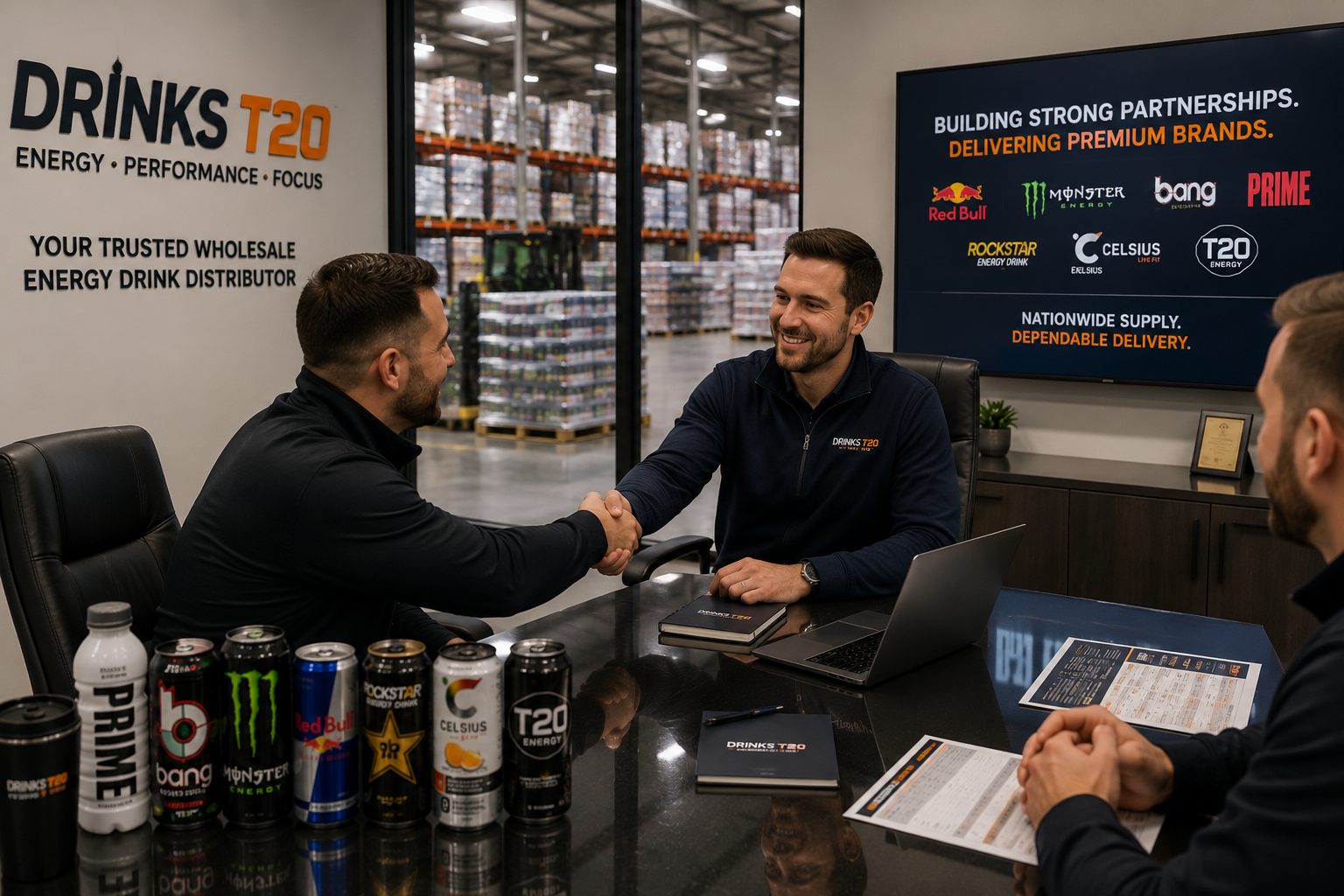
Choosing the Right Product Mix
The product mix decision is where many convenience store operators leave category revenue on the table. Stocking only the two or three brands the store has always carried feels safe, but it misses consumers who would purchase a different brand or format if it were available. At the same time, carrying too many slow-moving SKUs wastes cooler space that could be occupied by proven performers with more facings.
The right product mix balances core bestsellers that generate reliable volume with complementary options that capture different consumer segments. A practical framework for most convenience store locations:
Core volume drivers should occupy the majority of cooler space. Monster Energy in its primary SKUs, Red Bull in original and sugar-free formats and the store’s second-best performing brand based on local sales data are the foundation. These products should never be out of stock. Their velocity justifies multiple facings and priority placement.
Functional and sugar-free options are no longer a niche addition. Celsius, Monster Ultra and Red Bull Sugarfree serve a growing consumer segment that will not purchase traditional high-sugar formats. For most convenience store locations, excluding this segment means losing a meaningful share of potential category revenue to competitors who carry it.
Variety and emerging brands serve the trial-oriented consumer and help keep the category fresh for regular customers who may be open to trying something new alongside their usual purchase. Prime Energy, seasonal flavor releases from major brands and functional newcomers with visible consumer interest belong in this tier, introduced at lower quantities until local demand is confirmed.
The specific allocation across these tiers should reflect the location’s consumer profile. A highway corridor store allocates more space to core high-caffeine formats. A campus-adjacent store allocates more space to functional and variety options. A suburban store near a gym allocates more space to Celsius and performance-oriented SKUs.
How Wholesale Purchasing Supports Convenience Store Operations
The purchasing side of energy drink category management is as important as the merchandising side. A well-organized cooler cannot generate revenue if the product is not available to stock it. Reliable wholesale supply is the operational foundation that makes everything else possible.
Convenience stores at different stages of growth have different purchasing needs. A single-location independent store with moderate energy drink velocity may begin with bulk case purchasing, which provides commercial pricing and product access without the inventory commitment of a full pallet. As velocity increases and demand patterns become predictable, pallet ordering becomes more efficient. Multi-location operators or chains with central warehouse operations eventually benefit from truckload supply that supports centralized purchasing across the network.
The key consideration at each stage is matching purchase volume to confirmed sell-through. Ordering more than the store can move within a reasonable timeframe creates storage pressure and rotation problems. Ordering too little creates stockouts that lose sales. The right wholesale relationship helps a buyer calibrate those quantities based on their actual business, not generic market benchmarks.

Choosing the Right Wholesale Energy Drink Supplier
Supplier selection for a convenience store’s energy drink purchasing is a decision that affects daily operations. A supplier who cannot deliver reliably, communicate clearly or scale alongside the store’s growth creates problems that show up in the cooler every week. These are the evaluation criteria that matter most.
Commercial wholesale experience is the starting point. A supplier structured for B2B commercial buyers operates differently from a consumer retailer offering discounts on larger quantities. The ordering process, communication standards, freight coordination and problem-resolution approach are all different. Convenience store operators who choose a supplier without verifying their commercial capability often discover the difference after the first supply disruption.
Brand availability across the specific products the store carries is non-negotiable. A supplier who cannot reliably provide Monster, Red Bull and Celsius in the formats the store needs is not a practical supply partner for a convenience store, regardless of pricing on other SKUs.
Questions convenience store operators should ask before committing to a wholesale supplier:
- Does the supplier carry the core brands and SKUs that generate the most revenue at my location?
- Can they fulfill orders on a schedule that aligns with my reorder cycle?
- What are their realistic lead times for delivery to my address?
- Can they support bulk, pallet and truckload ordering as my volume grows?
- How do they communicate when supply constraints or delivery changes affect my order?
- Is their quotation process built for commercial buyers or do I have to navigate a consumer checkout?
Common Mistakes Convenience Stores Make With Energy Drinks
The operational mistakes that hurt convenience store energy drink performance most are rarely about making a wrong brand choice. They are about managing the category reactively instead of proactively.
Stocking Only Bestsellers Without Variety
Carrying only Monster and Red Bull captures the core buyer but misses the Celsius consumer, the Prime buyer, the sugar-free shopper and the customer who wants something different today. Variety within the cooler serves a wider share of potential buyers without requiring more floor space, just better SKU allocation within the existing cooler doors.
Allowing Stockouts on Core SKUs
Running out of Monster Original or Red Bull 8.4oz at a busy convenience store is a direct revenue loss. The customer who cannot find their preferred drink may purchase a substitute, but they also may leave without buying anything or shift their stop to a competitor who stocks reliably. Setting reorder points based on actual velocity data, not gut feel, prevents this.
Ignoring Location-Specific Demand
Buying the same product mix as every other store in the chain or region ignores the reality that consumer profiles vary significantly by location. A product mix built on local sales data outperforms one built on regional averages or supplier recommendations that do not account for the specific customer base at each site.
Poor Cooler Organization
A disorganized cooler reduces purchase conversion from browsers. Consumers who cannot quickly find what they want disengage. Grouping by brand, maintaining clear labels facing forward, keeping shelves fully faced and reviewing the layout regularly against sales data are all practices that generate measurable cooler performance improvement.
Ordering Without a Replenishment Schedule
Purchasing inventory only when the cooler is nearly empty creates a reactive cycle that produces both stockouts and rushed emergency orders. A planned replenishment schedule based on sell-through velocity and supplier lead time is more reliable and typically less expensive than reactive spot purchasing.
Using Sales Data to Manage the Category
Point-of-sale data is the most reliable guide to energy drink category decisions at the store level. Retailers who use it consistently make better purchasing decisions, maintain more appropriate inventory levels and respond to demand changes faster than those who manage by intuition or habit.
The metrics that matter most for convenience store energy drink management:
- Weekly and monthly unit sales by brand and SKU to understand velocity and trend direction
- Inventory turnover rate by SKU to identify fast movers that need more facings and slow movers that should be replaced
- Stockout frequency to quantify how often the store is losing sales due to unavailability
- Day-part sales patterns to understand when energy drink velocity is highest and ensure replenishment timing matches those peaks
- New product performance tracked separately for the first 60 to 90 days after introduction to make data-informed decisions about continuation
Retailers who review these metrics monthly can make incremental adjustments that compound over time into meaningful category performance improvement. Those who review annually often find themselves reacting to trends that have already passed.
Preparing for Future Energy Drink Trends
The energy drink category continues to evolve, and convenience store operators who monitor emerging trends are better positioned to adapt before competitors do. According to Statista, the U.S. energy drink market has maintained consistent growth for over a decade with no signs of category saturation, driven in part by product innovation and expanding consumer demographics.
Several trends are currently shaping consumer behavior in ways that affect convenience store purchasing decisions.
Sugar-free and zero-sugar formats have moved from a niche preference to a mainstream expectation. Consumers across age groups are reducing sugar intake, and the energy drink category has responded with a wide range of zero-sugar and reduced-calorie options. Convenience stores that do not carry adequate sugar-free representation within their energy drink set are losing purchases from this growing segment.
Functional energy drinks, led by Celsius but extending into a broader field of clean-label, vitamin-fortified and adaptogen-infused formats, have expanded the category’s consumer base beyond its traditional audience. These products appeal to health-conscious consumers who previously avoided energy drinks entirely. For convenience stores, carrying functional options alongside traditional formats captures a demographic that was not previously a category buyer.
Flavor innovation drives trial and repeat purchases even among loyal brand consumers. Limited-edition releases, seasonal flavors and new SKUs from established brands generate attention and purchasing behavior that standard permanent SKUs do not. Retailers who rotate in new flavors alongside core products maintain category freshness that keeps regular customers engaged.
The U.S. Small Business Administration notes that small retailers who actively manage category performance through data and supplier partnerships consistently outperform those who rely on static product selections. In the energy drink category, that principle applies directly. The stores that manage this category as an active revenue driver rather than a passive product section generate stronger results year over year.
Why Convenience Stores Partner With T20 Energy Drink USA LLC
T20 Energy Drink USA LLC is a Margate, Florida-based wholesale energy drink supplier that works exclusively with commercial buyers. Convenience store operators are among the primary accounts T20 serves, and the company’s supply model is structured around the operational reality of retail inventory management, not consumer-level transactions.
T20 supports convenience store operators with wholesale purchasing across multiple formats. Single-location independents can begin with bulk energy drink orders. Stores with confirmed demand and storage capacity can move to pallet supply. Multi-location groups and chains can access truckload purchasing for centralized inventory management. The distributor program supports buyers who supply multiple accounts.
Each pricing request is reviewed against the buyer’s specific product requirements, order volume, delivery location and business context. Convenience store operators receive a quotation that reflects their actual purchasing situation, not a generic rate that may not apply to their location or volume.
Request Wholesale Pricing for Your Convenience Store
Looking for a reliable wholesale energy drink supplier? T20 Energy Drink USA LLC supplies convenience stores across the United States with wholesale energy drinks, flexible ordering options and commercial purchasing support. Submit your product requirements, estimated volume and delivery location to receive a customized wholesale quotation.
Frequently Asked Questions About Convenience Store Energy Drink Trends
Why are energy drinks the top-performing beverage category in convenience stores?
Energy drinks combine consistent year-round demand, high purchase frequency, strong brand recognition and impulse-friendly purchasing behavior that suits the convenience store environment better than almost any other beverage category. The National Association of Convenience Stores reported they accounted for 27.8% of packaged beverage category dollars in U.S. convenience stores in 2024, more than any other single beverage segment.
Which consumer segments buy energy drinks most frequently at convenience stores?
Morning commuters, professional drivers including truckers and delivery workers, students near educational institutions, shift workers in manufacturing and healthcare, and impulse buyers across all demographics are the primary energy drink purchasers in convenience retail. The right product mix at any given store should reflect the specific consumer segments that location serves most frequently.
Should convenience stores carry multiple energy drink brands?
Yes. Stocking only one or two brands limits the store’s ability to serve consumers with different brand preferences, sugar-free requirements or interest in functional beverages. A well-planned product mix covering core volume drivers, sugar-free options and at least one functional or emerging brand captures more of the available category revenue at the location.
How does cooler organization affect energy drink sales?
Cooler organization directly affects purchase conversion. Products grouped by brand are easier to shop. Eye-level placement for core SKUs improves visibility. A fully faced, well-stocked cooler creates a better purchase environment than a partially empty or disorganized one. These are not aesthetic preferences. They affect how many of the customers who walk past the cooler actually purchase from it.
What is the best way to manage energy drink inventory at a convenience store?
Set reorder points based on actual weekly sell-through velocity by SKU. Review sales data weekly rather than monthly. Implement FIFO rotation as a standard restocking procedure. Plan inventory increases ahead of confirmed high-demand periods rather than reacting after demand has already spiked. Track new product performance separately for the first 60 to 90 days before making continuation decisions.
When should a convenience store switch to wholesale energy drink purchasing?
Any convenience store with consistent, predictable energy drink demand benefits from wholesale purchasing because it improves inventory stability, reduces per-unit cost and simplifies the ordering process compared with retail-level purchasing. The specific format, bulk, pallet or truckload, depends on the store’s volume, storage capacity and whether it operates as a single location or part of a multi-site network.
Which energy drink trends are most important for convenience store operators to watch?
The growth of sugar-free and zero-calorie formats, the expansion of functional energy drinks led by Celsius into mainstream convenience channels, flavor innovation driving trial and repeat purchase from established brands and the broadening of the energy drink consumer base beyond traditional demographics are the four trends with the most direct impact on convenience store category management decisions.
How do I request wholesale pricing for my convenience store?
Submit product requirements, preferred brands, estimated order volume and delivery location through the Request Pricing page. The T20 team reviews each request and responds with a customized wholesale quotation based on the store’s specific purchasing needs.