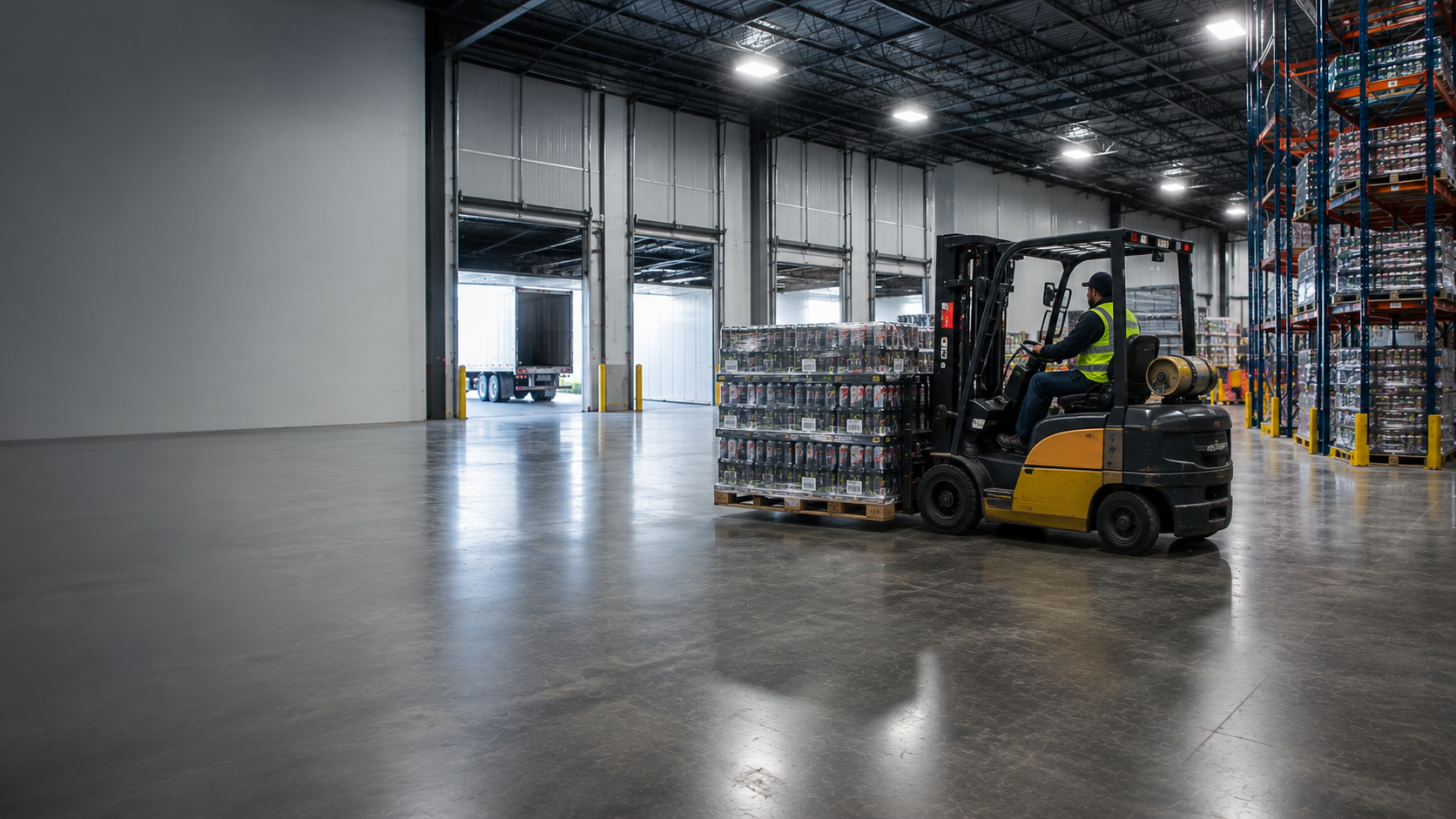

Truckload energy drinks purchasing is where wholesale supply becomes a logistics operation. At this scale, the commercial buyer is not simply stocking a cooler or filling a vending route. They are managing a supply chain. A regional beverage distributor supplying 60 retail accounts needs a fundamentally different purchasing structure than a single convenience store. A supermarket group replenishing a central distribution center operates at a volume and planning complexity that pallet ordering cannot efficiently support. Truckload supply exists for buyers who have reached that point in their business, where the economics of consolidating inventory into full freight shipments are better than placing multiple smaller orders throughout the month.
This guide explains how truckload energy drink supply works in practice, which buyers it suits, what logistics and warehouse planning it requires, how pricing is structured and what separates a supplier capable of supporting this purchasing level from one that is not. Buyers still evaluating their wholesale options can review the energy drink wholesale USA overview for broader market context before deciding whether bulk, pallet or truckload purchasing fits their current operation.
What Is Truckload Energy Drink Supply?
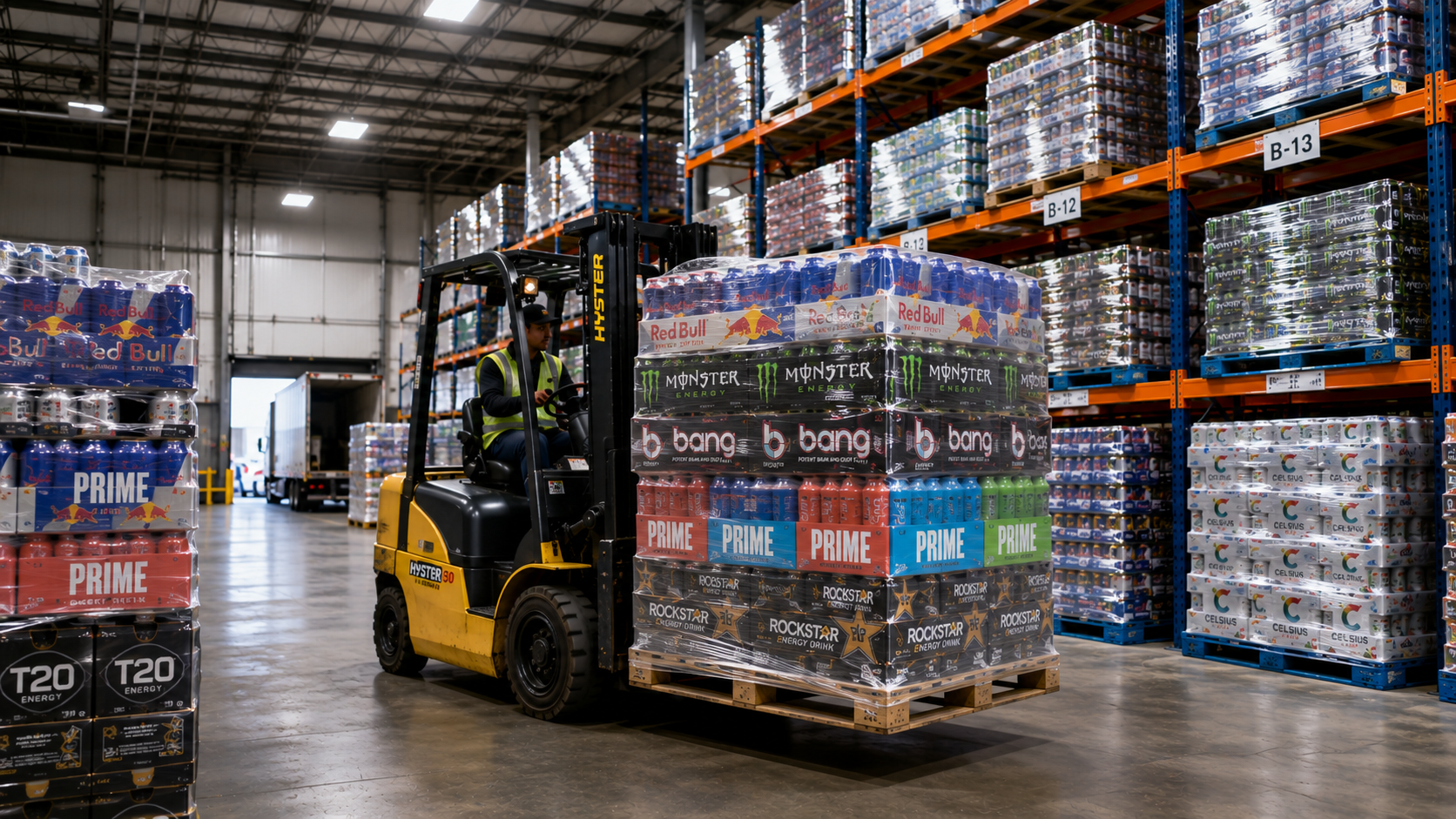
Truckload energy drink supply is the purchase and delivery of a large commercial quantity of energy drinks in a dedicated freight vehicle. The entire trailer is allocated to that buyer’s order rather than shared with other shipments, which is how truckload purchasing differs structurally from less-than-truckload freight. The buyer fills the truck, or close to it, and the shipment moves directly to their receiving location.
This format is built for buyers whose volume justifies it. A truckload of energy drinks represents a significant inventory position, which is why the businesses that purchase at this level are typically regional distributors, multi-location retail operators, supermarket groups and large commercial accounts whose downstream demand is established and predictable enough to absorb that volume efficiently.
Truckload supply is the natural progression for buyers who have outgrown pallet ordering. When a business reaches the point where it is regularly ordering multiple pallets per week and managing the logistics of repeated freight deliveries, consolidating that volume into periodic truckload shipments often reduces total logistics complexity and improves per-unit economics. The transition does not happen at a fixed volume threshold. It happens when the buyer’s demand is consistent enough and their warehouse infrastructure is capable enough to make a full trailer quantity operationally manageable.
Who Orders Energy Drinks by the Truckload?
Truckload purchasing is concentrated among buyers with one common characteristic: they are supplying inventory to multiple points of sale or multiple downstream accounts, not a single retail location. The scale of demand that justifies a full truckload comes from aggregating consumption across a distribution network, not from a single store.
Beverage Distributors
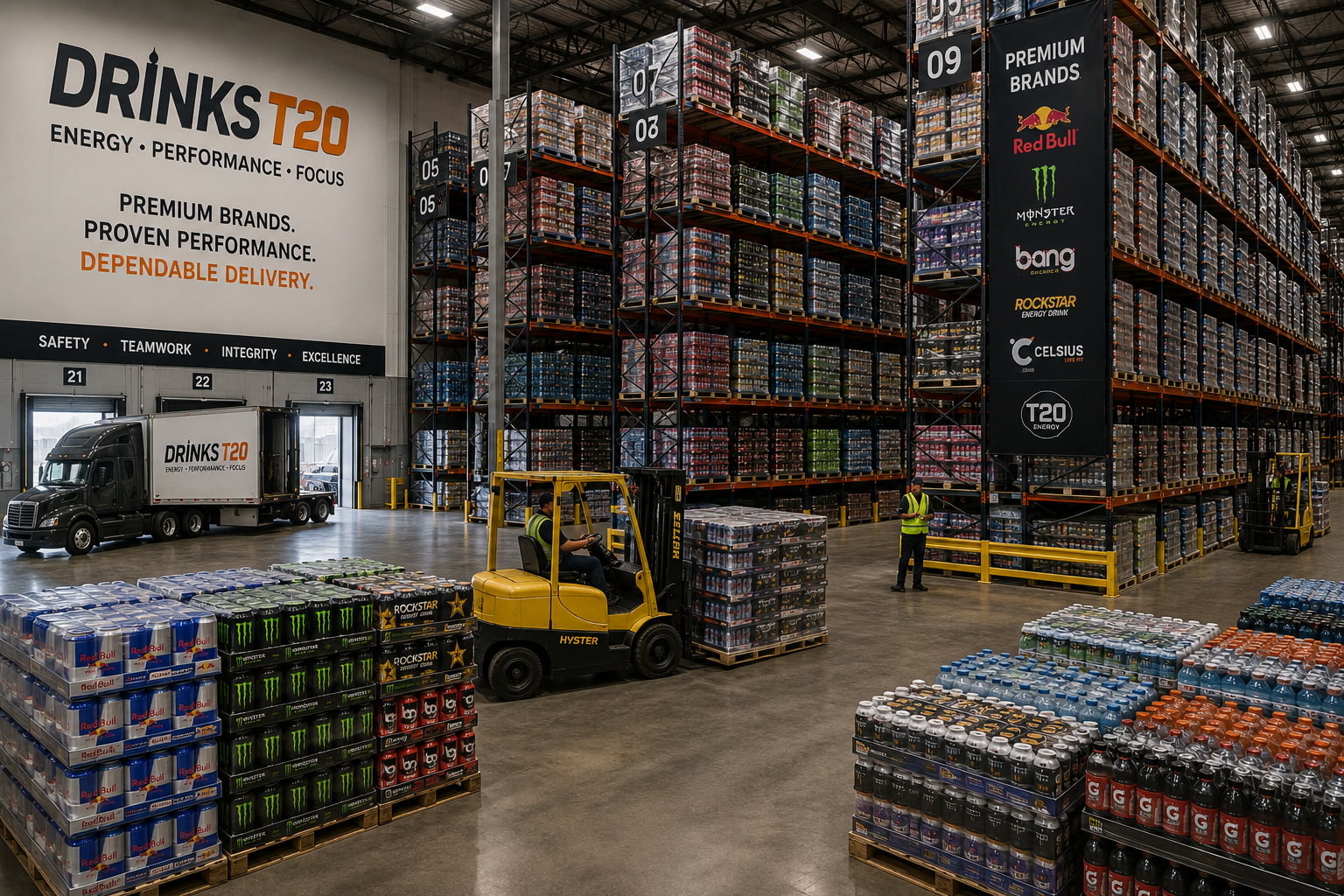
Beverage distributors are the primary truckload buyers in the wholesale energy drink market. A regional distributor with 40 to 80 retail accounts across a territory needs to hold enough inventory at their warehouse to fulfill weekly delivery routes without running short between purchase cycles. Pallet ordering at that scale means placing frequent orders and managing multiple freight deliveries. Truckload purchasing consolidates that into a smaller number of larger replenishment events that are easier to plan around.
For distributors, the truckload format also supports better margin management. The per-unit economics at truckload volume are more favorable than pallet pricing, which gives the distributor more room to price competitively to their retail accounts while maintaining acceptable margins on the supply side.
Distributors evaluating truckload supply partnerships should also consider the T20 distributor program, which is structured for buyers operating at multi-account distribution scale.
Retail Chains and Convenience Store Networks
Convenience store groups operating multiple locations often use truckload purchasing to centralize inventory management. Instead of placing separate pallet orders for each store and managing individual deliveries to each site, a multi-location operator can receive a single truckload at a central point and distribute internally to each location based on demand. This approach standardizes the product mix across the network, reduces inbound freight events and gives the purchasing team more control over what is stocked at each site.
A convenience store chain operating 15 to 20 locations in a region can move through energy drink inventory at a volume that makes truckload purchasing practical. The consolidation benefit compounds as the store count grows.
Supermarket Groups
Supermarket operators managing regional distribution centers use truckload purchasing to replenish beverage inventory across multiple store locations from a central warehouse. Category buyers at the supermarket group level plan inventory against promotional calendars, planogram resets and seasonal demand cycles. Truckload purchasing aligns with that planning cadence because it allows the buyer to build an inventory position ahead of a promotional period rather than scrambling for product mid-promotion.
A supermarket group running a major energy drink promotion across 12 stores for a two-week period needs a supply position that covers the promotional uplift. That supply position is most efficiently acquired at truckload volume, not through multiple pallet orders placed reactively as shelves deplete.
Large Commercial and Vending Operations
Vending companies operating large machine networks, warehouse refreshment programs and commercial facility accounts across wide geographic areas sometimes reach truckload purchasing volume when their machine count and route density justify it. A vending operator running 150 or more machines across a metropolitan area is managing a distribution operation that mirrors a small beverage distributor in terms of weekly inventory throughput. At that scale, truckload supply may be more efficient than ongoing pallet purchasing.
Full Truckload vs Less-Than-Truckload vs Pallet Orders
Understanding the practical differences between these three freight formats helps buyers choose the right option for their current operation and plan the transition as volume increases.
Bulk Energy Drink Orders
Bulk orders are the entry point for commercial energy drink purchasing. They suit buyers whose demand is above retail levels but not yet at a volume that justifies pallet freight. Independent retailers, gyms, offices, event suppliers and new commercial accounts starting their supply relationship typically begin here. Bulk purchasing provides commercial pricing and product access with the flexibility to adjust quantities as demand patterns become clearer.
Pallet Orders
Pallet orders are the workhorse format for established commercial buyers with consistent demand. A convenience store, gas station, vending operator or regional distributor with confirmed sales velocity and adequate receiving infrastructure uses pallet purchasing as their primary supply format. It provides significantly more inventory than bulk ordering with manageable logistics requirements. For a detailed breakdown of pallet purchasing, the energy drink pallet orders guide covers the format in full.
Full Truckload Shipments
Truckload supply is for buyers whose pallet demand has become frequent enough that consolidating into full trailer quantities is operationally and economically superior. The buyer receives more inventory in fewer delivery events, accesses the best per-unit pricing available and simplifies inbound logistics at their warehouse. The tradeoff is a larger upfront inventory commitment and the warehouse infrastructure required to receive and manage a full trailer of product.
Most commercial buyers progress through these formats in sequence. Bulk ordering establishes the supply relationship. Pallet purchasing follows when demand is confirmed. Truckload supply becomes the right format when pallet orders are frequent enough that consolidation makes logistical sense.
When Should a Business Move to Truckload Purchasing?
The transition from pallet to truckload purchasing is not about reaching an arbitrary volume threshold. It is about reaching a point where the logistics and economics of truckload supply are more favorable than continuing with repeated pallet orders. These are the operational signals that typically indicate a buyer is ready for the transition.
A business is likely ready for truckload purchasing when it:
- Operates multiple retail locations or manages a territory of downstream accounts
- Maintains a central warehouse with the capacity to receive and store a full trailer quantity
- Places pallet orders frequently enough that consolidation would reduce inbound freight events meaningfully
- Has confirmed, predictable demand across enough SKUs to fill a trailer efficiently
- Has the cash flow to support a larger upfront inventory purchase
- Has unloading infrastructure including loading dock access, forklift or pallet jack capability and receiving staff
If demand is still inconsistent or warehouse capacity is limited, pallet purchasing remains the better format. Truckload purchasing creates operational and financial pressure if the buyer cannot move through the inventory at a pace that matches the purchase commitment. The decision should be based on confirmed sell-through data, not projected demand that has not yet materialized.
Logistics Planning for Truckload Energy Drink Deliveries
Truckload deliveries require more preparation than pallet or bulk shipments. A full freight trailer arriving at a warehouse is a significant receiving event. Buyers who have not prepared their receiving operation before the first truckload delivery often encounter delays, handling problems and inventory organization issues that could have been avoided with basic planning.
The first requirement is physical access. A full freight trailer needs a loading dock or a yard with enough space to maneuver. Not every commercial location has this. Buyers receiving truckload deliveries at sites without dock access need to arrange alternative unloading solutions before the shipment is scheduled, not when the driver arrives.
Unloading equipment is the second requirement. A full truckload of energy drinks represents many pallets of product. Moving that volume off a trailer manually is not practical. A forklift is the standard equipment for full truckload receiving. A pallet jack may work for smaller configurations but slows the process considerably for larger loads. Buyers should confirm their equipment capability matches the delivery volume before the first order is placed.
Warehouse staffing during the receiving window matters at this scale. A truckload delivery is not a task for one person. Adequate staff to unload, count, inspect and put away inventory keeps the delivery window short and reduces the chance of receiving errors that create inventory discrepancies.
Additional logistics considerations for truckload buyers:
- Delivery appointment scheduling and receiving window confirmation
- Loading dock height compatibility with the freight carrier’s trailer
- Product inspection during receiving for damaged cases or incorrect SKUs
- FIFO rotation setup for incoming stock placed behind existing inventory
- Internal distribution plan if the product is being allocated across multiple locations
- Lead time from order placement to scheduled delivery
Warehouse and Storage Considerations
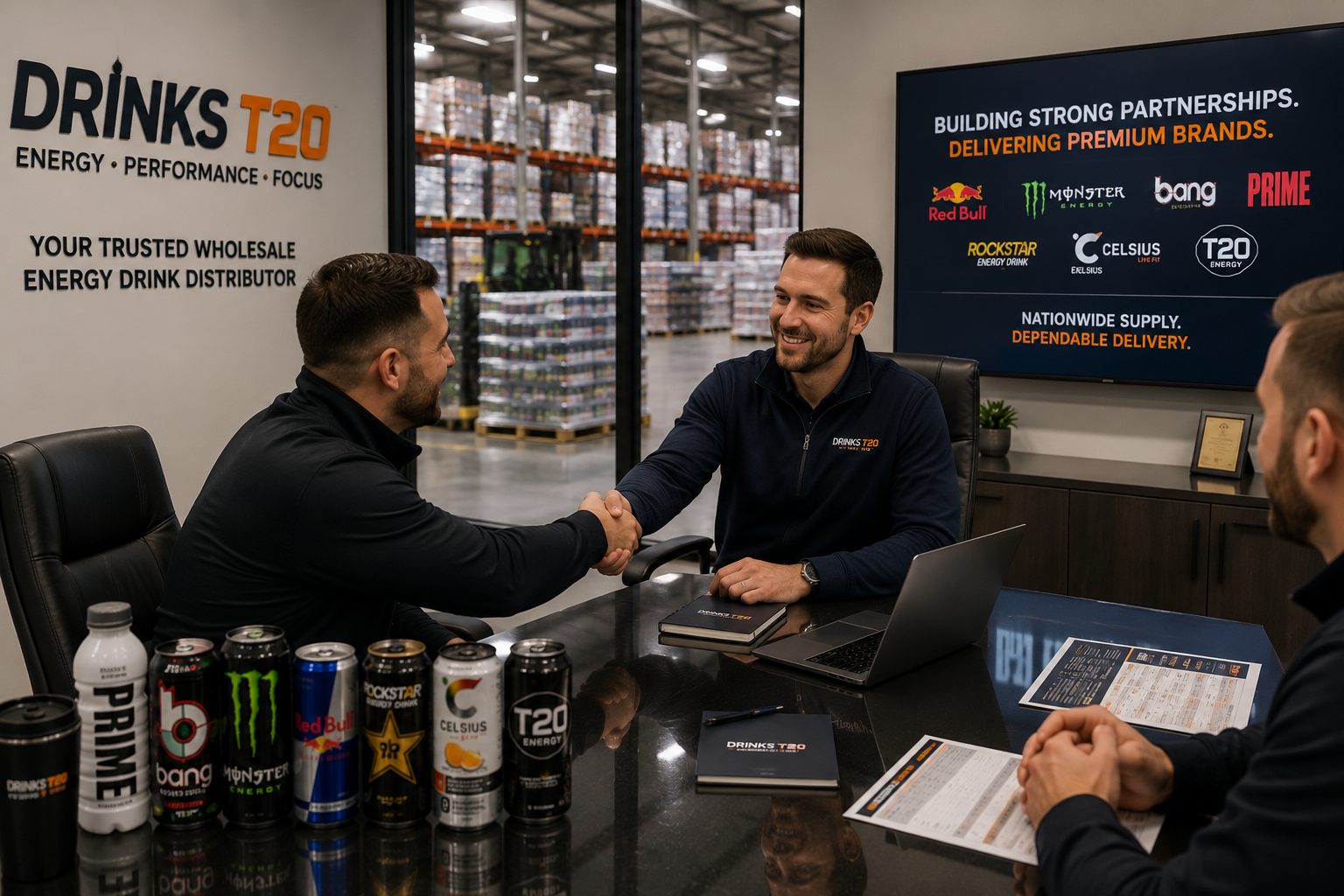
Warehouse organization becomes more consequential at truckload purchasing scale. The volume of product arriving in a single delivery requires a receiving area that can accommodate it, storage space that can hold it organized by brand and SKU, and aisle clearance that allows safe and efficient movement with handling equipment.
Buyers who have managed pallet-level inventory are already familiar with the fundamentals, but a truckload multiplies those requirements. Designated storage bays for each brand or product category, clear pallet labeling, accurate receiving counts and systematic FIFO rotation are not optional practices at this scale. They are the operational foundation that keeps a large inventory position from becoming a liability.
Warehouse best practices for truckload energy drink buyers:
- Designate specific storage areas for each brand to prevent mixing and simplify rotation
- Label pallet locations clearly with brand, SKU and receive date
- Implement FIFO rotation as a standard receiving procedure, not an afterthought
- Inspect every incoming pallet for damaged cases during the receiving process
- Conduct weekly inventory counts to track sell-through and plan reorder timing
- Separate fast-moving SKUs from slower products to prioritize accessibility
- Maintain clear aisle access for forklift movement throughout the storage area
Businesses managing truckload inventory across multiple locations should also establish a clear internal distribution process. Knowing which locations are allocated which products before the truckload arrives, rather than deciding after receiving, keeps the process efficient and reduces the chance of allocation errors that leave one location short while another holds excess stock.
Managing Inventory Across Multiple Locations
One of the primary commercial advantages of truckload purchasing is the ability to centralize supply management. A buyer who receives a truckload at a central warehouse and distributes internally to multiple retail locations or accounts eliminates the need for separate inbound freight events at each site. That consolidation reduces total logistics complexity, improves purchasing consistency across the network and gives the procurement team better visibility over total inventory position.
Multi-location operators using centralized truckload purchasing should track sell-through by location to understand which sites consume which SKUs fastest. A gas station on a highway truck route may move through Monster Original and Red Bull 12oz faster than any other SKU. A convenience store near a university may sell more Celsius and Prime than traditional energy formats. Allocation decisions should reflect those location-specific patterns rather than distributing product uniformly across all sites.
Regular sales data review at the location level gives procurement teams the information needed to refine future truckload composition. Carrying the right SKU mix in the right quantities at each location reduces both stockout risk and slow-moving inventory accumulation.
Factors That Influence Truckload Energy Drink Pricing
Truckload pricing is the most favorable per-unit pricing available in wholesale energy drink supply, but the final quote reflects a range of variables that buyers need to understand to evaluate proposals accurately.
Brand composition is the most significant factor. A truckload of Monster Energy is priced differently from a truckload of Celsius or a mixed-brand load. Brand demand, market pricing and current availability all affect what a supplier can offer per unit at truckload volume. Buyers should be clear about their brand requirements when requesting quotes rather than asking for a generic truckload price that may not reflect their actual product needs.
Delivery destination directly affects total landed cost. Freight rates vary significantly based on distance, route and regional logistics conditions. A buyer in Florida sourcing from a Florida-based supplier faces very different freight economics than a buyer in Colorado or Washington state. Total landed cost, product price plus freight, is the only meaningful comparison metric when evaluating truckload quotes from multiple suppliers.
Scheduling and lead time also affect pricing. Buyers who can commit to delivery windows with reasonable advance notice give suppliers and freight carriers more flexibility, which often translates into better logistics coordination. Emergency or short-notice truckload orders typically carry higher freight premiums.
Common factors that influence truckload pricing:
- Brand selection and current market pricing for each brand
- SKU composition and case configuration within the load
- Total order volume and trailer utilization
- Delivery destination and freight distance
- Loading dock requirements and delivery window constraints
- Order frequency and account relationship stability
- Current product availability and supply conditions
Buyers should submit detailed requirements through the Request Pricing page to receive a quote that reflects their actual order rather than a generic estimate. Providing brand preferences, approximate quantities, delivery address and preferred timeline gives the supplier the information needed to prepare a commercially accurate response.
How to Choose the Right Truckload Energy Drink Supplier
At truckload purchasing scale, supplier selection is a high-stakes decision. A missed delivery, an incorrect product composition or a supply interruption does not affect one store. It affects every account or location that depends on that inventory. The supplier relationship at this level is a critical operational dependency, and it should be evaluated accordingly.
The most important qualities in a truckload energy drink supplier are supply consistency, logistics capability and communication quality. A supplier who can quote attractively but cannot reliably fulfill orders on schedule or communicate proactively when issues arise is not a viable truckload partner. The consequences of supplier failure at this scale are too significant.
Questions that matter when evaluating a truckload supplier:
- Is the supplier structured for commercial wholesale supply at truckload scale, not primarily a consumer-facing retailer?
- Can they confirm product availability for the specific brands and SKUs you need before the order is placed?
- What are their realistic lead times for truckload delivery to your location?
- How do they handle supply shortfalls, substitutions or scheduling changes?
- Do they have experience with the freight and logistics requirements of truckload delivery?
- Is communication responsive and specific during the quotation process?
- Can they support recurring truckload orders as your purchasing volume grows?
Responsiveness and specificity during the quotation process are the clearest indicators of what the post-order relationship will look like. A supplier who provides vague answers, cannot confirm specifications or takes days to respond to straightforward commercial questions is showing you how they will operate when a delivery problem needs to be resolved urgently.
Common Challenges in Truckload Energy Drink Purchasing
Truckload purchasing introduces operational responsibilities that do not exist at smaller purchasing scales. Understanding these challenges before the first truckload order reduces the risk of avoidable and costly problems.
Overestimating Demand
Committing to truckload volume before demand is confirmed at that scale is the most consequential mistake a buyer can make at this purchasing level. A truckload of product that takes four months to sell through ties up significant working capital, creates storage pressure and may result in expiration losses if sell-through is slower than projected. Demand should be confirmed through actual sales data from pallet-level purchasing before truckload quantities are committed.
Insufficient Warehouse Infrastructure
A buyer whose warehouse cannot physically accommodate a full truckload delivery is not ready for truckload purchasing. This includes floor space, unloading equipment, receiving staffing and aisle clearance for handling equipment. These requirements should be confirmed and in place before the first truckload order is placed, not assessed on delivery day.
Narrow SKU Planning
Buyers who load a truckload with only their highest-selling SKUs and ignore the broader product mix miss revenue opportunities and limit their ability to serve the full range of consumer demand at their retail or distribution accounts. A well-composed truckload includes core high-velocity SKUs alongside complementary options that serve different consumer segments within the energy drink category.
Poor Inventory Rotation
At truckload volume, a FIFO rotation failure affects a large quantity of product. Older inventory that does not rotate out ahead of newer stock creates expiration risk at a scale that generates real financial losses. FIFO should be a structured, enforced receiving procedure at this purchasing level, not a guideline that staff follows informally.
Selecting Suppliers Based on Price Alone
The lowest truckload quote is not the best truckload deal if the supplier cannot deliver consistently. At this scale, a supply interruption costs more in downstream disruption than any per-unit savings from choosing the cheapest option. Evaluate the full commercial value of the supplier relationship, including logistics reliability, communication quality and their track record with buyers at similar purchasing volumes.
Planning Future Truckload Orders
Successful truckload buyers do not purchase reactively. They develop purchasing schedules built around historical sales data, seasonal demand patterns and business growth projections. A structured purchasing calendar reduces emergency orders, prevents stockouts between delivery cycles and gives the supplier the lead time needed to prepare and schedule freight effectively.
Seasonal demand patterns matter at this scale. Convenience store groups and gas station networks typically see stronger beverage sales in summer months. Travel centers experience demand spikes during holiday travel periods. Beverage distributors may need to adjust purchasing volume around promotional campaigns or new account acquisitions. These patterns should be built into the forward purchasing plan rather than reacted to after inventory runs short.
Procurement teams should review these metrics on a regular cycle:
- Monthly sales performance by SKU and location
- Warehouse inventory position and available storage capacity
- Upcoming promotional commitments that will accelerate demand
- New account or location additions that will increase throughput
- Supplier lead time changes that affect scheduling
- Seasonal demand forecasts based on prior-year performance
These reviews allow procurement teams to align truckload order timing with actual business requirements rather than guessing at quantities and timing that may not match operational reality.
Building a Long-Term Wholesale Supply Partnership
Truckload purchasing works best within an established supply relationship rather than as a series of transactional spot purchases. A supplier who understands your business, your product requirements and your delivery constraints is a better operational partner than one you approach fresh each time with a new inquiry.
Long-term supply relationships also provide more flexibility when market conditions shift. When a high-demand brand faces supply pressure, a buyer with an established relationship and a track record of consistent orders is better positioned to maintain supply continuity than a transactional buyer competing on the spot market.
A supplier capable of supporting bulk orders, pallet shipments and full truckload deliveries within the same commercial relationship provides the flexibility to scale purchasing as the business grows without switching supply partners at each stage. That continuity has real operational value.
Why Businesses Work With T20 Energy Drink USA LLC
T20 Energy Drink USA LLC is a Margate, Florida-based wholesale energy drink supplier built for commercial buyers, not consumer transactions. The company supports truckload purchasing for beverage distributors, convenience store groups, supermarket operators, vending companies and large commercial buyers across the United States.
The T20 supply model covers the full range of commercial purchasing formats. Buyers can begin with bulk orders, progress to pallet supply and move into truckload purchasing within the same supplier relationship as their business grows. Distributors and multi-account operators can explore the distributor program for supply structures designed specifically for buyers managing downstream retail accounts.
Every quotation is prepared against the buyer’s stated product requirements, order volume, delivery destination and operational context. Buyers receive pricing that reflects their actual commercial situation, not a generic rate that may not apply to their order.
Request a Truckload Energy Drink Quote
If your business requires large-volume wholesale energy drink supply, T20 Energy Drink USA LLC is ready to support it. Submit your product requirements, brand preferences, estimated quantities and delivery location through the Request Pricing page. The T20 team reviews each request and prepares a customized wholesale quotation based on your specific commercial needs.
Frequently Asked Questions About Truckload Energy Drinks
What is a truckload energy drink shipment?
A truckload energy drink shipment is a large commercial freight delivery in which a full trailer, or close to full, is loaded with energy drink inventory for a single commercial buyer. It is the highest-volume purchasing format in wholesale energy drink supply and is designed for distributors, retail chains and commercial operators whose demand justifies full trailer quantities.
Who typically orders truckload quantities?
Regional beverage distributors, multi-location convenience store operators, supermarket groups, large vending operations and commercial buyers managing central warehouse distribution are the most common truckload buyers. The common requirement is aggregated demand across multiple accounts or locations that makes full trailer quantities operationally and economically practical.
How is a truckload different from a pallet order?
A pallet order delivers a defined number of shrink-wrapped cases on one or more pallets via standard freight. A truckload fills a dedicated trailer with a substantially larger inventory quantity in a single shipment. The per-unit economics favor truckload purchasing, but the warehouse infrastructure requirements and inventory commitment are significantly greater than pallet ordering.
When should a business move from pallet orders to truckload supply?
The transition makes sense when a business is placing frequent pallet orders, has confirmed predictable demand across enough SKUs to fill a trailer, has warehouse infrastructure capable of receiving and managing a full truckload and has the cash flow to support a larger upfront inventory commitment. Demand should be confirmed through actual sales data before committing to truckload volume.
Can truckload orders include multiple energy drink brands?
Mixed-brand truckload composition depends on product availability and supplier capability. Buyers should specify their brand preferences and required SKU mix during the quotation process. A supplier who can accommodate a mixed-brand load provides more flexibility for buyers who need variety across their distribution accounts.
What warehouse infrastructure do I need for truckload delivery?
Truckload delivery requires loading dock access or equivalent receiving infrastructure, a forklift for unloading, adequate floor space to stage and store the incoming inventory and sufficient staffing to complete the receiving process within the delivery window. These requirements should be confirmed before the first truckload order is placed.
How does truckload pricing compare to pallet pricing?
Truckload purchasing typically provides the most favorable per-unit pricing available in wholesale energy drink supply. The per-unit cost is lower than pallet pricing because the order volume is larger and the logistics per unit are more efficient. Total landed cost including freight should be the comparison metric when evaluating truckload quotes.
How do I request a wholesale truckload quotation?
Commercial buyers submit brand preferences, SKU requirements, estimated order volume, delivery address and preferred timeline through the Request Pricing page. The T20 team reviews each submission and responds with a customized quote based on the buyer’s specific commercial requirements.